UAE’s one-stop shop for tools, power & hand tools, water, sewage & vacuum pumps, air compressors & generators.
how-induction-motor-works-types-uses

How Does an Induction Motor Work, Types and Uses

Induction motors are among the most widely used electric machines in modern electrical and industrial systems. They quietly power everyday equipment such as air conditioners, refrigerators, pumps, compressors, and ventilation units, while also serving as the driving force behind heavy manufacturing machinery and automated production lines. 

Their widespread adoption is mainly due to simple construction, dependable long-term performance, low maintenance requirements, and the ability to operate directly on alternating current power that is readily available in homes, commercial buildings, and industrial facilities.

Understanding how an induction motor works does not require complex mathematics. Once the basic electromagnetic principle and internal structure are clear, it becomes easy to see why these motors dominate real-world applications. 

This article explains the working mechanism, structural design, major types, and practical uses of induction motors in a clear and professional manner.

What Is an Induction Motor

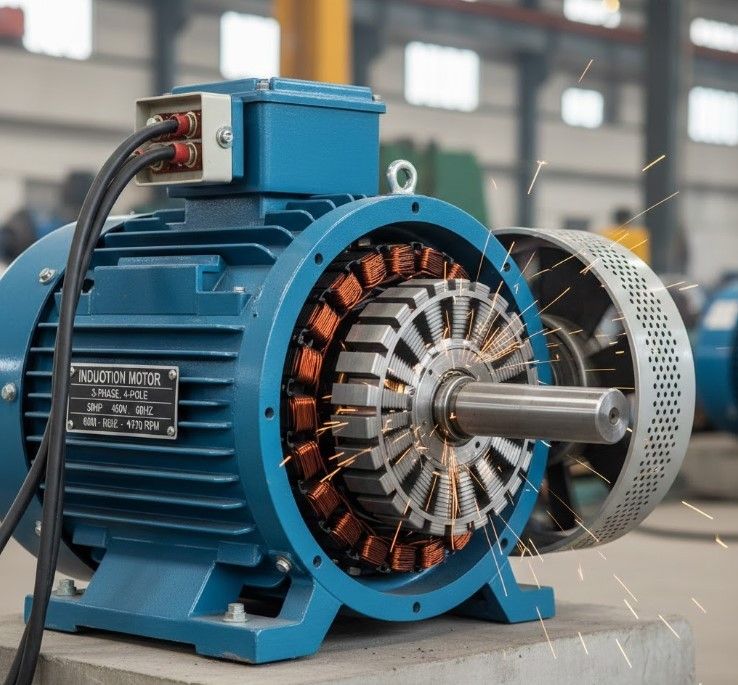
An induction motor is an AC electric motor in which rotation is produced through electromagnetic induction in the rotor. Electrical supply is provided only to the stator windings. The stator creates a rotating magnetic field that induces current in the rotor conductors. 

This induced current produces torque, causing the rotor shaft to rotate and deliver mechanical power to connected equipment. Because the rotor does not require direct electrical contact, induction motors do not use brushes or commutators. 

This reduces mechanical wear, minimizes maintenance, and increases operational reliability, making the motor suitable for continuous duty in demanding environments.

Working Principle of an Induction Motor

When alternating current flows through the stator windings, it generates a magnetic field that rotates at synchronous speed. The rotor is placed inside this rotating magnetic field with a small air gap separating the two components.

As the rotating magnetic field cuts across the rotor conductors, it induces an electric current according to electromagnetic induction laws. The induced current creates another magnetic field within the rotor. Interaction between the stator and rotor magnetic fields produces electromagnetic force, which generates torque and causes continuous rotation of the motor shaft.

The rotor speed never reaches the exact synchronous speed of the magnetic field. The small difference between these speeds is known as slip. Slip is essential for maintaining induced current and sustained torque production inside the motor.

Structure of an Induction Motor

The internal construction of an induction motor mainly includes the stator, rotor, shaft, bearings, cooling system, and protective casing. Laminated silicon steel is used in both stator and rotor cores to reduce energy losses. 

Copper windings in the stator generate the rotating magnetic field, while the rotor converts electromagnetic energy into mechanical motion. 

Two common rotor designs are used in induction motors.

Squirrel Cage Rotor

This is the most widely used rotor type. Conductive bars made of aluminum or copper are short-circuited by end rings, forming a strong and compact structure. Squirrel cage motors are rugged, economical, and require very little maintenance, making them ideal for continuous industrial operation.

Wound Rotor

In this design, three-phase windings are connected to slip rings mounted on the rotor shaft. External resistance can be introduced to improve starting torque and control acceleration. These motors are typically used in heavy-load applications such as cranes, hoists, and elevators.

Types of Induction Motors

Induction motors are broadly classified based on the electrical supply used for operation.

Single-Phase Induction Motors

Single-phase motors are commonly used in residential and small commercial environments where only single-phase power is available. Because single-phase supply does not naturally create a rotating magnetic field, auxiliary starting methods such as capacitors or additional windings are required.

These motors are widely found in fans, refrigerators, washing machines, vacuum cleaners, and small water pumps where power demand is relatively low.

Three-Phase Induction Motors

Three-phase induction motors operate using three-phase AC supply, which naturally produces a strong rotating magnetic field. This enables self-starting capability, higher efficiency, smoother torque, and reliable continuous performance.

For this reason, three-phase motors are extensively used in conveyors, compressors, mixers, ventilation systems, machine tools, and automated manufacturing equipment.

Comparison of Three-Phase and Single-Phase Induction Motors

FeatureThree-phase MotorSingle-phase Motor
AC Power SupplyThree-phaseSingle-phase
Starting MethodSelf-startingRequires capacitor or auxiliary winding
EfficiencyHighLower
ConstructionMore complexSimpler
MaintenanceMore difficultEasier
ApplicationsIndustrial and commercial equipmentDomestic and light-load devices

Applications in Daily Life and Industry

Induction motors are present across nearly every sector of modern life. In homes, they provide motion for cooling systems, pumps, and airflow devices. Commercial facilities rely on them for escalators, refrigeration units, and service equipment. 

Industrial plants depend heavily on three-phase induction motors to drive conveyors, grinders, mixers, packaging machinery, and ventilation systems required for continuous production. Their durability and efficiency make large-scale manufacturing and automated processing possible.

Advantages of Induction Motors

Induction motors offer several practical advantages. Their design is mechanically simple and robust. Absence of brushes reduces maintenance and increases service life. They operate efficiently for long durations and tolerate dust, vibration, and temperature variations. 

Manufacturing cost is relatively low, allowing use in both small appliances and heavy industrial systems. Modern electronic drives further enhance performance through precise speed control and improved energy efficiency.

FAQs

What is an induction motor?

An induction motor is an AC electric motor that produces rotation using a rotating magnetic field and induced current in the rotor.

How does an induction motor work?

It creates a rotating magnetic field in the stator that induces current in the rotor, generating torque and mechanical motion.

Why is slip important in an induction motor?

Slip is the small speed difference between the magnetic field and rotor that allows continuous current induction and torque production.

What are the main types of induction motors?

The two primary types are single-phase induction motors for light loads and three-phase induction motors for industrial applications.

Where are induction motors commonly used?

They are widely used in household appliances, HVAC systems, pumps, conveyors, compressors, and manufacturing machinery.

Conclusion

Induction motors convert electrical energy into mechanical motion through electromagnetic induction created by alternating current in the stator. Their simple structure, reliability, efficiency, and wide application range make them the most commonly used electric motors worldwide. 

From household appliances to heavy industrial machinery, induction motors remain essential to modern engineering and daily life. As technology advances, induction motors continue to become more efficient and versatile, reinforcing their importance in modern electrical engineering.

Browse Al Yaqeen Hardware to explore high-quality induction motors designed for a wide range of applications.
what-is-an-industrial-vacuum-pump-types-and-their-uses

What is an Industrial Vacuum Pump? Types and Their Uses

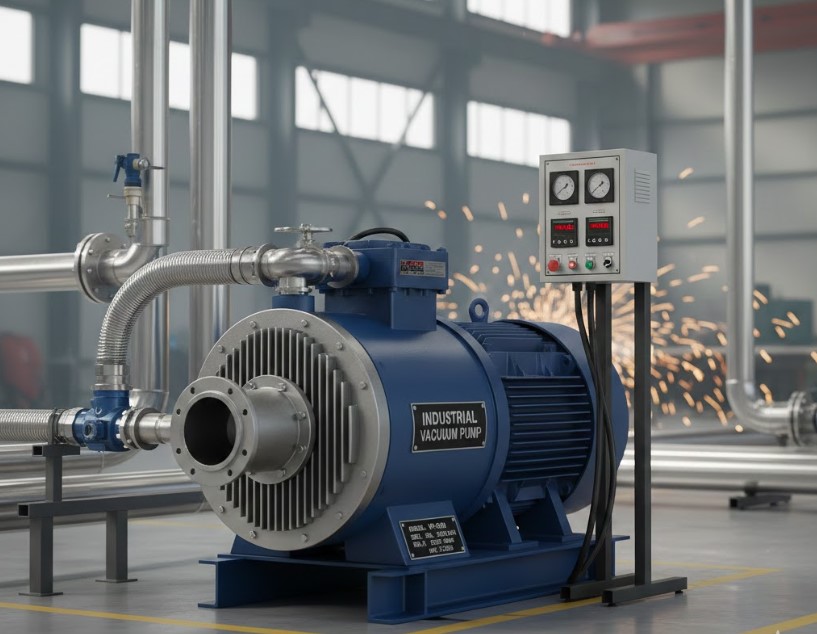
Industrial vacuum pumps are essential machines designed to remove gas molecules from a sealed volume, creating a vacuum environment for various industrial, laboratory, and manufacturing applications. 

These pumps play a critical role in processes that require controlled pressure, material handling, and precise environmental conditions. 

Understanding their types, applications, and operational standards is vital for buyers, engineers, and facility managers seeking reliable performance and compliance with industry standards.

Understanding Industrial Vacuum Pumps

An industrial vacuum pump is not just a mechanical device; it is a core component in industries ranging from chemical processing to electronics manufacturing. These pumps reduce the pressure in a confined space, enabling processes like degassing, filtration, drying, and packaging. 

The vacuum created influences the efficiency, quality, and safety of operations, making the choice of pump a critical business decision.

Why industrial vacuum pumps matter:

  • Enhanced process efficiency in chemical, pharmaceutical, and food industries
  • Reduced contamination risk by operating in sealed systems
  • Energy savings through optimized vacuum generation
  • Compliance with ISO and ASTM standards for industrial safety

For businesses seeking dependable solutions, exploring leading vacuum pump suppliers ensures access to high-quality pumps, spare parts, and expert technical support, helping maintain smooth operations and maximum efficiency.

How Industrial Vacuum Pumps Work

The vacuum pump working principle depends on the type of pump, but most operate by displacing, compressing, or entrapping gases. The pump’s mechanism, materials, and design determine the achievable vacuum level, pumping speed, and compatibility with gases or liquids.

Key considerations in operation:

  • Oil-lubricated vs. oil-free operation
  • Continuous vs. intermittent use
  • Chemical resistance and temperature tolerance

Understanding the working principle is essential when selecting the correct vacuum pump for specific industrial or laboratory applications.

Types of Industrial Vacuum Pumps

There are various types of vacuum pumps used in industries, each optimized for particular processes. Knowing the vacuum pump types and applications helps buyers and engineers choose the right solution.

1. Rotary Vane Vacuum Pumps

Rotary vane pumps use a rotor with sliding vanes to create a vacuum by displacement. They are widely used for general industrial purposes, such as packaging, laboratory applications, and degassing.

Entities & Features:

  • Typical applications: Chemical processing, printing, food packaging
  • Operational standards: ISO 9001, CE certified
  • Advantages: Compact design, reliable performance, low maintenance

For industries requiring high-performance rotary vane vacuum pumps, trusted brands like Battioni Pagani provide durable, efficient solutions with warranties, spare parts, and technical support, making them ideal for chemical, packaging, and laboratory applications.

2. Diaphragm Vacuum Pumps

These pumps use a flexible diaphragm to move air or gases without direct contact with moving parts. They are ideal for applications requiring oil-free vacuum, such as laboratory, pharmaceutical, or semiconductor operations.

Entities & Features:

  • Oil-free design ensures contamination-free operation
  • Applications: Gas sampling, vacuum filtration, analytical instruments
  • Advantages: Low vibration, chemical resistance, precise control

3. Liquid Ring Vacuum Pumps

Liquid ring pumps operate using a rotating impeller in a sealed liquid, usually water, forming a vacuum through gas compression. They excel in handling wet or corrosive gases, often in chemical and petrochemical plants.

Entities & Features:

  • Ideal for heavy-duty industrial applications
  • Compatible with steam, condensates, and chemical vapors
  • Operational advantage: Continuous operation, minimal wear, corrosion resistance

4. Piston and Plunger Vacuum Pumps

Piston or plunger pumps create a vacuum using reciprocating motion. They are suitable for high vacuum applications requiring precise control over gas removal.

Entities & Features:

  • Applications: Research labs, degassing, vacuum drying
  • Advantages: High vacuum capability, reliable for intermittent use
  • Key considerations: Requires lubrication, regular maintenance

5. Scroll Vacuum Pumps

Scroll pumps use two interleaved spiral scrolls to compress gas and create a vacuum. Their compact, oil-free design makes them suitable for electronics manufacturing and medical device production.

Entities & Features:

  • Applications: Semiconductor, optical coating, vacuum packaging
  • Advantages: Quiet operation, low maintenance, clean vacuum output

How to Choose the Right Industrial Vacuum Pump

Selecting an industrial vacuum pump involves evaluating process requirements, environmental factors, and long-term reliability. Consider these key factors:

  • Vacuum Level Required: Ensure the pump can reach the desired ultimate vacuum, measured in mbar or Torr, to meet your process needs.
  • Pumping Speed: Determines how quickly a vacuum is created for a given volume, affecting overall efficiency.
  • Chemical Compatibility: Confirm that pump materials resist corrosion from gases, vapors, or chemicals handled in your process.
  • Oil vs. Oil-Free Operation: Oil-sealed pumps offer durability for heavy-duty tasks, while oil-free pumps prevent contamination in sensitive applications.
  • Brands and Support: Trusted brands like Battioni Pagani, Busch, and Nash provide warranties, spare parts, and technical assistance.
  • Energy Efficiency: Evaluate power consumption and operational costs for continuous industrial or laboratory use.

Choosing the right pump ensures process reliability, operational efficiency, and reduced downtime, supporting the strategic goals of your production or laboratory setup.

Standards, Warranty, and Maintenance

Compliance with ISO 9001, CE, and ASTM standards ensures safety and performance. Most industrial vacuum pumps come with warranties ranging from 12 to 36 months, depending on the brand and operational intensity.

Regular maintenance, including lubrication, filter replacement, and inspection, prolongs lifespan and maintains efficiency.

Applications Across Industries

Industrial vacuum pumps are used in a wide range of sectors, creating entities and relationships that define modern manufacturing:

  • Chemical & Petrochemical: Degassing, distillation, and solvent recovery
  • Pharmaceutical & Laboratory: Freeze-drying, vacuum filtration, and research experiments
  • Food & Beverage: Packaging, bottling, and dehydration processes
  • Electronics & Semiconductor: Vacuum coating, component assembly, and cleanroom operations
  • Automotive & Machinery: Vacuum forming, brake systems, and material handling

These diverse applications highlight the importance of choosing the right pump type, brand, and maintenance strategy to ensure seamless industrial operations.

FAQs

What is an industrial vacuum pump?

An industrial vacuum pump is a device that removes air or gas molecules from a sealed space to create a controlled vacuum. It is used in laboratories and chemical processing for efficient and safe operations.

What are the types of vacuum pumps used in industries?

Common types include rotary vane, diaphragm (dry), liquid ring, piston/plunger, and scroll vacuum pumps. Each type is designed for specific industrial or laboratory applications.

How does a vacuum pump work?

Vacuum pumps create a vacuum by displacing, compressing, or trapping gas molecules. This reduces pressure inside a system to support processes like drying, filtration, or packaging.

Which vacuum pump is best for laboratory use?

Diaphragm (dry) pumps and rotary vane pumps are preferred for labs due to oil-free operation and contamination-free performance. 

Final Insights 

Choosing the right vacuum pump is essential for ensuring efficiency, reliability, and precision in industrial and laboratory operations. From rotary vane and diaphragm pumps to liquid ring and scroll pumps, selecting a high-quality solution minimizes downtime, supports smooth processes, and meets industry standards.

Exploring trusted suppliers and understanding factors like vacuum level, pumping speed, and chemical compatibility can help you make the best choice for your operations. For businesses in UAE looking for dependable, high-performance vacuum and industrial equipment, I recommend Al Yaqeen Hardware.

With certified pumps, expert technical support, and customized solutions, we help enhance efficiency, minimize downtime, and optimize operations. Contact our vacuum pump consultants to discuss your requirements and find the ideal vacuum pumps for your processes.

informative-guide-to-industrial-machines-types-and-uses

Industrial Machines: An Informative Guide to Types & Uses

Industrial machines form the backbone of modern manufacturing, construction, and material handling. They help businesses increase productivity, ensure precision, and maintain high-quality standards. Understanding the different types of industrial machines and their applications is essential for operators, engineers, and procurement specialists. 

This guide offers a comprehensive overview of industrial machinery, real-world examples, and expert insights to help you make informed decisions.

What Are Industrial Machines?

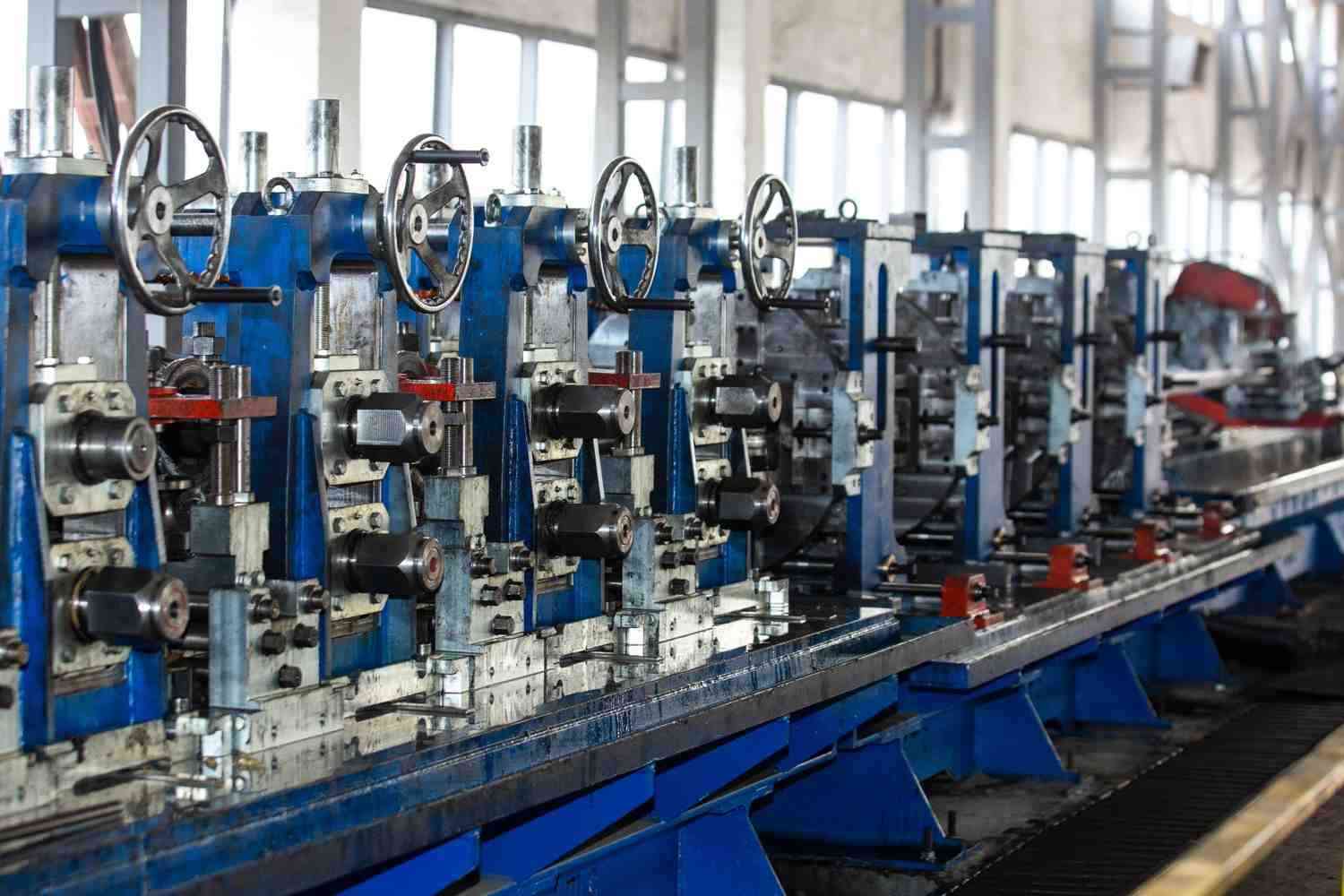
Industrial machines are specialized equipment designed to perform repetitive, heavy-duty, or complex tasks. Unlike handheld tools, these machines can handle large volumes, provide high accuracy, and often integrate automation or smart sensors.

Examples include CNC machines, welding machines, air compressors, and concrete equipments. Proper selection involves evaluating production volume, operational efficiency, and safety compliance.

Industrial machines are used across multiple sectors, including automotive, aerospace, food processing, construction, and agriculture. Using the right equipment can significantly reduce labor costs while improving consistency and output quality.

Major Types of Industrial Machines

Manufacturing and Production Machines

Manufacturing machines transform raw materials into finished goods with precision. These systems are designed for accuracy, repeatability, and high-volume industrial output.

CNC Machines

CNC machines perform milling, drilling, and turning of metals, plastics, and composites. Automotive and aerospace manufacturers depend on CNC systems for tight tolerances and consistent part quality.

Welding Machines

Welding machines join metal components in construction, shipbuilding, and automotive fabrication. Modern systems support MIG, TIG, and ARC welding to improve strength, reduce defects, and increase production efficiency.

Air Compressors

Air compressors supply pressurized air for pneumatic tools, surface finishing, and industrial automation. Factories and workshops benefit from consistent air supply, and investing in high-capacity air compressors ensures uninterrupted pneumatic tool operation and smoother automation processes.

Selecting the right manufacturing equipment requires understanding material type, production scale, and tolerance requirements. Modern machines often include IoT integration for real-time monitoring and predictive maintenance.

Material Handling and Construction Equipment

Concrete equipments and lifting equipments are key to construction and infrastructure projects.

  • Concrete mixers and batching plants: Provide on-site production of high-quality concrete for residential and commercial buildings.
  • Lifting equipments: Cranes, hoists, and forklifts improve material handling efficiency and reduce manual labor on-site. On busy construction sites and warehouses, investing in certified industrial lifting equipment improves load handling efficiency, minimizes manual risks, and speeds up material movement.
  • Excavators and bulldozers: Essential for earthmoving, foundation digging, and site leveling.

Using construction machinery integrated with smart sensors allows managers to track fuel efficiency, performance, and maintenance schedules. Investing in reliable equipment ensures timely project completion and cost efficiency. 

Power and Fluid Handling Machines

Reliable energy and fluid machines maintain industrial operations without interruptions.

  • Generators: Provide backup power to factories, hospitals, and construction sites, ensuring continuous operations during outages. To avoid costly downtime during power failures, many facilities depend on industrial-grade generators that provide reliable backup power for continuous operations.
  • Diesel operated pumps: Widely used for dewatering, irrigation, and industrial fluid transfer where electricity is limited. For remote sites and emergency drainage needs, durable diesel operated pumps offer dependable water transfer where electrical supply is unavailable.
  • Water pumps: Ensure consistent water supply for industrial plants, agriculture, and municipal projects. Choosing reliable water pumps ensures efficient fluid transfer, pressure stability, and long-term operational reliability.

Modern power and fluid machines often incorporate smart monitoring and energy-efficient designs to reduce operational costs and enhance reliability.

Specialized Industrial Machines

Industrial sectors often require specialized machines to optimize specific operational processes.

  • Vacuum pumps and exhaust blower fans:Used in chemical processing, HVAC systems, and packaging lines to control air flow and remove gases, improving workplace safety and process efficiency.
  • Induction motors and engines: Power conveyor systems, compressors, and heavy-duty production lines where continuous operation and torque stability are essential.

Using specialized industrial machines ensures process consistency, improves product quality, and supports compliance with industry standards. Sourcing equipment from a trusted industrial hardware supplier in Dubai ensures access to certified machines, genuine spare parts, and products suited for demanding industrial environments.

Key Considerations When Choosing Industrial Machines

Application Suitability

When investing in industrial machinery, the first factor to consider is application suitability. Ensure the machine matches your production or operational needs to achieve optimal efficiency and accuracy.

Capacity and Power Requirements

Align the machine’s output with your production scale to prevent underperformance or unnecessary energy consumption. Choosing the right capacity ensures smooth operations and reduces operational costs.

Maintenance and Support

Maintenance and support are crucial for long-term reliability. Check for spare part availability and ease of servicing to minimize downtime and ensure continuous operations.

Safety and Compliance

Verify that machines adhere to local and international safety standards. Proper compliance protects your workforce and ensures regulatory requirements are met.

Automation and Technology Integration

Machines equipped with IoT sensors or robotics can enhance efficiency, enable predictive maintenance, and improve overall operational control. Leveraging modern technology helps maximize productivity.

Expert Assistance

Requesting a quote from a trusted supplier or consulting with an expert ensures you select the right machine tailored to your facility’s requirements. Professional guidance reduces risk and supports better investment decisions.

Advantages of Using Industrial Machines

Investing in industrial machines delivers multiple benefits for any business. Modern equipment increases production speed and efficiency, reduces labor costs through automation, and improves consistency, precision, and overall product quality. These machines also enhance workplace safety and ensure compliance with industry standards.

High-quality industrial machines provide predictable operational costs thanks to energy-efficient designs and reliable performance. They support business scalability, improve operational reliability, and contribute to long-term profitability, making them a strategic investment for sustainable growth.

AI Overview

This blog explores industrial machines, their types, uses, and benefits, including welding machines, air compressors, generators, and pumps, helping businesses optimize productivity and efficiency.

FAQs

What are the main types of industrial machines?

Industrial machines include manufacturing, construction, power, material handling, and specialized machines used across industries. These machines improve productivity, precision, and operational efficiency in many sectors.

How do I select the right industrial machine for my facility?

Choose a machine based on your production requirements, capacity, and operational environment to ensure efficiency and reliability.

Are modern industrial machines energy-efficient?

Many machines now feature energy-saving technologies and IoT monitoring, reducing consumption. Energy-efficient designs lower operational costs while maintaining high productivity.

Can industrial machines be automated?

Yes, many manufacturing, packaging, and material handling machines support automation.
Automation increases output, consistency, and reduces labor dependency.

Conclusion

Investing in the right industrial machines is crucial for improving productivity, efficiency, and safety across manufacturing, construction, and industrial operations. Understanding machine types, applications, and key considerations ensures you make informed decisions that enhance output quality and long-term reliability.

For businesses in the UAE seeking reliable industrial machines and equipment solutions, Al Yaqeen Hardware is your trusted partner for high-performance tools, pumps, and machinery that support growth and operational excellence.

Contact our machinery consultants today to discuss your requirements and find the perfect machinery solutions for your operations.

Search for products

Back to Top
Product has been added to your cart
Compare (0)