UAE’s one-stop shop for tools, power & hand tools, water, sewage & vacuum pumps, air compressors & generators.
manual-vs-automatic-bar-bending-machines-key-factors

Manual vs. Automatic Bar Bending Machines: Key Factors

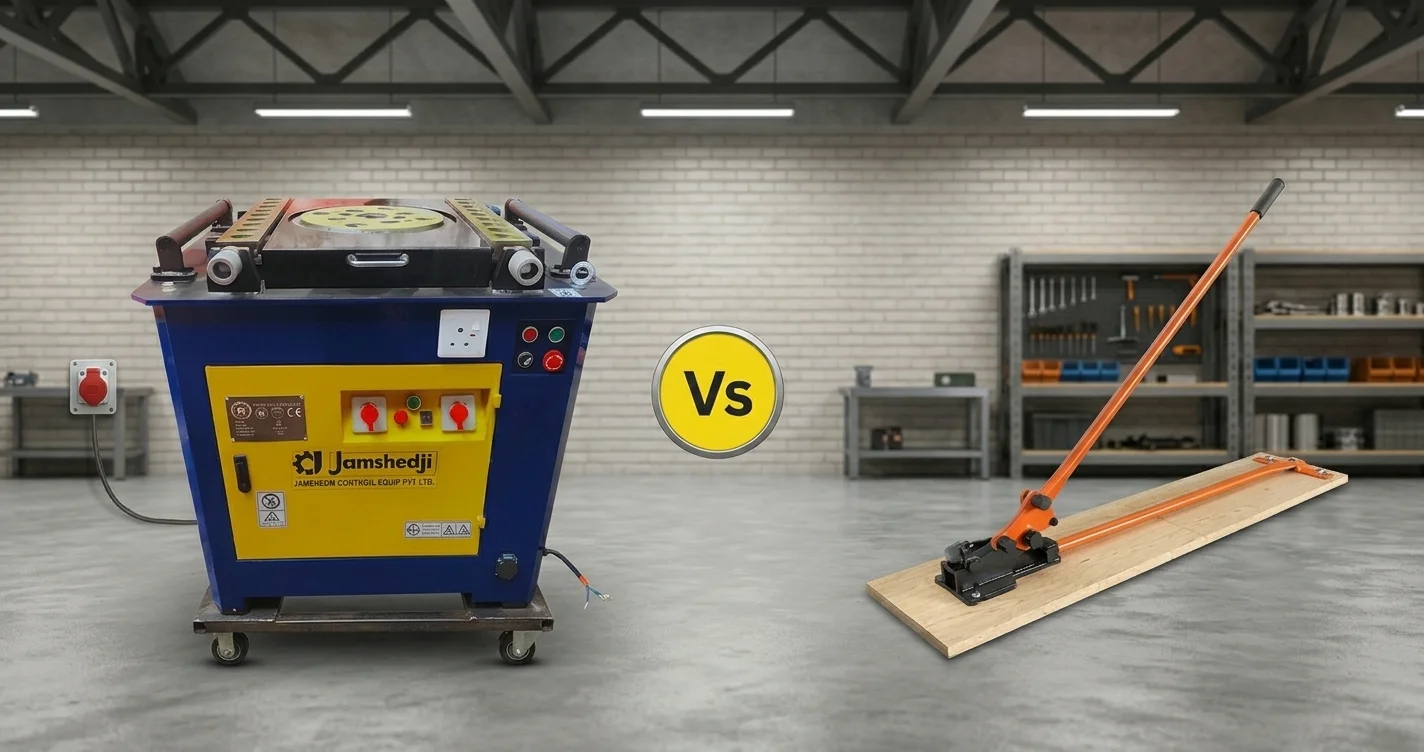
Manual bar bending machines are suitable for smaller construction jobs and occasional reinforcement work, while automatic machines are better for repetitive bending and higher production volumes. This guide compares their speed, accuracy, labour requirements, costs, maintenance and safety to help contractors choose the right machine for their project.

Bending reinforcement bars is an important part of preparing steel for concrete structures. Contractors need accurately shaped bars for columns, beams, slabs and foundations. The bending process must follow the structural drawings because incorrect angles or dimensions can create problems during reinforcement installation.

Choosing the right machine can make this work easier. However, not every construction project needs the same equipment. Manual machines can handle smaller workloads, while automatic machines are designed to improve production speed and consistency when bending large quantities of steel. Understanding the differences helps contractors select equipment that matches their daily requirements and budget.

What Is a Bar Bending Machine?

A bar bending machine is construction equipment used to bend steel reinforcement bars into specific angles and shapes. It helps prepare reinforcement according to structural drawings without relying entirely on manual tools and physical effort.

These machines are commonly used to prepare reinforcement for:

  • Columns and beams
  • Concrete slabs and foundations
  • Stirrups and reinforcement hooks
  • Bridges and road infrastructure
  • Industrial and commercial buildings

The machine’s capacity depends on its design, motor power, bending mechanism and supported steel diameter. Choosing the right equipment helps maintain consistent bends and reduces unnecessary handling during reinforcement preparation.

Manual Bar Bending Machines

A manual bar bending machine requires direct operator involvement to position and bend reinforcement bars. Depending on its design, the operator uses a lever, handle or mechanical arrangement to apply the required force.

These machines are generally suitable for small construction projects where bending quantities are limited. They are also useful for repair work and locations where a powered machine may not be practical.

Benefits of Manual Bar Bending Machines

Lower Initial Investment

Manual machines generally cost less than automatic equipment. They are a practical option for small contractors who do not need to process large quantities of reinforcement every day.

Simple Operation

Their operating mechanisms are relatively straightforward. Workers can learn the basic bending process without extensive technical training.

Easy Transportation

Compact manual equipment is easier to move between work areas. This is useful when bending requirements change across smaller construction sites.

Straightforward Maintenance

Manual machines have fewer mechanical and electrical components. Routine cleaning, lubrication and inspection can help keep them in working condition.

Limitations of Manual Machines

Manual equipment also has limitations that contractors should consider before purchasing.

  • Lower production speed: Each bending operation requires more direct operator involvement.
  • Physical effort: Repeated bending can cause fatigue during longer working shifts.
  • Operator-dependent accuracy: Results can vary depending on the worker’s experience and measurement technique.
  • Limited capacity: The maximum bar diameter depends on the machine’s design and mechanical strength.
  • Higher labour requirements: Larger workloads may require additional workers and more operating time.

Manual equipment works well when production requirements are limited. However, it can become inefficient when a project requires hundreds of similar bends within a short period.

Automatic Bar Bending Machines

An automatic bar bending machine uses a motor-driven mechanism and control system to perform bending operations with less manual effort. Depending on the model, operators can select bending angles and operating settings through a control panel.

Some machines provide automatic angle control, while advanced CNC models can store bending programmes for repeated shapes. These capabilities vary by model, so buyers should check the manufacturer’s specifications before selecting equipment.

Benefits of Automatic Bar Bending Machines

Faster Production

Automatic equipment can process repetitive bending jobs more efficiently. This helps construction teams prepare reinforcement without spending excessive time on individual bars.

Consistent Bending Results

Machines with automatic angle controls can produce repeatable bends when correctly configured. This is useful when preparing multiple reinforcement bars with identical dimensions.

Reduced Physical Effort

Motor-driven operation reduces the physical work required from operators. Workers can focus more on positioning, monitoring and handling reinforcement.

Suitable for Larger Workloads

Depending on their rated capacity, automatic machines can support demanding construction and fabrication operations.

Limitations of Automatic Machines

Despite their productivity benefits, automatic machines also involve additional requirements.

  • Higher purchase cost: Motorised and advanced control systems generally require a larger initial investment.
  • Power dependency: Electric models need a suitable and stable power supply.
  • Technical maintenance: Motors, electrical systems and control components require proper inspection.
  • Operator training: Workers must understand the controls, settings and safety procedures.
  • Space requirements: Larger machines need sufficient operating and material-handling space.

Automatic equipment is generally a better fit when regular production demand justifies the additional investment.

Manual vs. Automatic Bar Bending Machines: Key Differences

The main difference is the level of operator involvement and the amount of work each machine can handle efficiently. Manual equipment offers simplicity for smaller jobs, while automatic equipment supports faster and more repeatable bending for larger workloads.

Comparison FactorManual MachineAutomatic Machine
OperationMore manual involvementMotor-driven operation
Initial CostGenerally lowerGenerally higher
Production SpeedLowerHigher
Bending AccuracyDepends on operatorMore repeatable with proper settings
LabourMore physical involvementReduced physical effort
Bar CapacityDepends on machine designDepends on machine design
MaintenanceGenerally simplerMore technical components
Power SupplyDepends on designRequires electricity
Best ApplicationSmall projectsMedium and large workloads

Speed and Daily Production

Production speed is an important consideration when comparing the two machines. Manual bending takes more time because workers must control each operation. This can be manageable when only a limited number of reinforcement bars need processing.

Automatic equipment can complete repetitive bending operations with less manual intervention. For example, a contractor preparing identical stirrups for several floors may benefit from automatic angle settings and consistent production.

The actual output depends on bar diameter, bend angle, machine capacity, operator experience and material handling.

Bending Accuracy and Consistency

Accurate bending helps reinforcement bars fit the dimensions specified in structural drawings. With manual equipment, workers must measure and control the bending process carefully.

Automatic machines can reduce variations by using preset angles and controlled bending mechanisms. However, automation does not remove the need to check finished bars. Incorrect settings, unsuitable tooling or improperly positioned reinforcement can still produce inaccurate results.

Labour and Operating Costs

Manual machines usually require more physical involvement from workers. When production increases, contractors may need additional labour to maintain the required output.

Automatic equipment reduces repetitive physical work and can help operators process more reinforcement within the same shift. However, its higher purchase price, electricity consumption and maintenance costs must also be included when calculating the overall investment.

Which Machine Is Suitable for Your Construction Project?

The right choice depends on how frequently you bend reinforcement, the bar sizes you handle and the production schedule.

Manual machines are suitable for:

  • Small residential construction projects.
  • Renovation and repair work.
  • Occasional reinforcement bending.
  • Sites with limited power availability, where the machine design permits manual operation.
  • Contractors with lower production requirements.

Automatic machines are suitable for:

  • High-rise building construction.
  • Bridges and infrastructure projects.
  • Large commercial developments.
  • Repetitive reinforcement fabrication.
  • Construction workshops handling regular bending orders.

For example, a small contractor preparing reinforcement for a few residential columns may not need advanced automation. A fabrication workshop supplying reinforcement for multiple construction sites may benefit from a machine with automatic controls.

Factors to Consider Before Buying a Bar Bending Machine

Before selecting equipment, compare your actual working requirements rather than choosing a machine based only on its price or automation level.

1. Maximum Bar Diameter

Check the maximum steel diameter supported by the machine. Also consider the steel grade because higher-strength reinforcement may require greater bending force.

2. Daily Production Requirements

Estimate how many bars and bends your team needs to complete during a normal working shift. This helps determine whether manual or automatic operation is more practical.

3. Bending Angles and Shapes

Review your reinforcement drawings to identify the angles and shapes required. Check whether the machine can produce those bends without additional tooling or complicated adjustments.

4. Motor Power and Electrical Supply

For electric machines, verify the motor rating, voltage, phase requirements and available site power before purchasing.

5. Spare Parts and Technical Support

Check the availability of replacement pins, rollers, electrical components and servicing support. Access to suitable spare parts can reduce downtime during busy construction periods.

Contractors looking for suitable equipment can explore the available steel bending machines and compare the available options against their project requirements.

Maintenance and Safety Considerations

Both manual and automatic machines need regular maintenance. Poor maintenance can affect bending performance, increase equipment wear and create avoidable safety risks.

Basic Maintenance Checklist

FrequencyMaintenance Task
DailyRemove steel debris and inspect the machine before use.
WeeklyCheck moving parts, bending pins and mechanical connections.
MonthlyInspect electrical connections, motor condition and lubrication points.
As RequiredReplace worn components and arrange professional servicing.

Always follow the manufacturer’s maintenance instructions for the specific machine model.

Safe Operating Practices

Operators should wear suitable protective equipment, including safety footwear, gloves and eye protection. Keep hands away from rotating discs, bending pins and other moving components during operation.

Before starting a bending cycle, check that the reinforcement is correctly positioned and that the machine is stable. Never exceed its rated capacity or attempt to adjust moving components while the machine is running.

Automatic machines should also have accessible emergency stop controls where specified by the manufacturer. Proper operator training and a clear working area are essential for both machine types.

Conclusion

The right choice is rarely about which machine is better in general. It is about which one fits your bar sizes, daily output, site power and team. Manual machines suit small and flexible work. Automatic machines suit large, repeat heavy jobs where speed and accuracy pay back the higher cost.

If you are still comparing manual vs. automatic bar bending machines for an upcoming project, the team at Al Yaqeen Hardware can help you shortlist a machine that matches your workload and budget.

Pick the right bar bending machine the first time

Tell us your bar sizes, daily volume and site conditions, and our team will recommend a manual or automatic machine that fits your work. You get clear specifications and a written quote, with no guesswork before you buy.

Frequently Asked Questions

What is the main difference between manual and automatic bar bending machines?

Manual machines require more operator involvement, while automatic machines use motor-driven controls to perform bending operations with less physical effort. Automatic models are generally better for repetitive and higher-volume work.

Are automatic bar bending machines more accurate than manual machines?

Automatic machines can provide more consistent bending angles through preset controls. However, correct machine settings, suitable tooling and regular inspection are still necessary to achieve accurate results.

Which bar bending machine is better for small construction projects?

A manual machine is often suitable for small projects with limited reinforcement requirements. It offers simpler operation and a lower initial investment compared with more advanced automatic equipment.

What should I check before buying a bar bending machine?

Check the maximum bar diameter, bending angles, production capacity, motor power, voltage requirements, machine dimensions and spare parts availability. These specifications should match your actual construction requirements.

Do automatic bar bending machines require regular maintenance?

Yes. Automatic machines need regular cleaning, lubrication and inspection of their motors, electrical connections and control components. Follow the manufacturer’s maintenance schedule to maintain reliable operation.

Read More Blogs From Al Yaqeen Hardware

  1. Bar Bending Machine Benefits for Modern Construction Projects shows how the right bending equipment improves speed and accuracy on site, which pairs directly with the manual and automatic comparison.
  2. 5 Tips to Extend Your Bar Bending Machine’s Life shares practical upkeep habits that keep both manual and automatic machines running longer.
  3. Important Factors to Know Before Investing in Power Tools breaks down what to check on power source, safety and durability before you buy, which helps when weighing a powered machine.
  4. Industrial Machines: An Informative Guide to Types And Uses covers generators, welding machines, air compressors and pumps, useful if you are equipping a full site.
  5. Best Air Compressor Brands and Suppliers in UAE compares leading brands to help you pick the right compressor for your site. This is the weakest topical fit, so keep it last.
a-guide-to-choosing-the-right-engine-for-machinery

A Guide to Choosing the Right Engine for Machinery

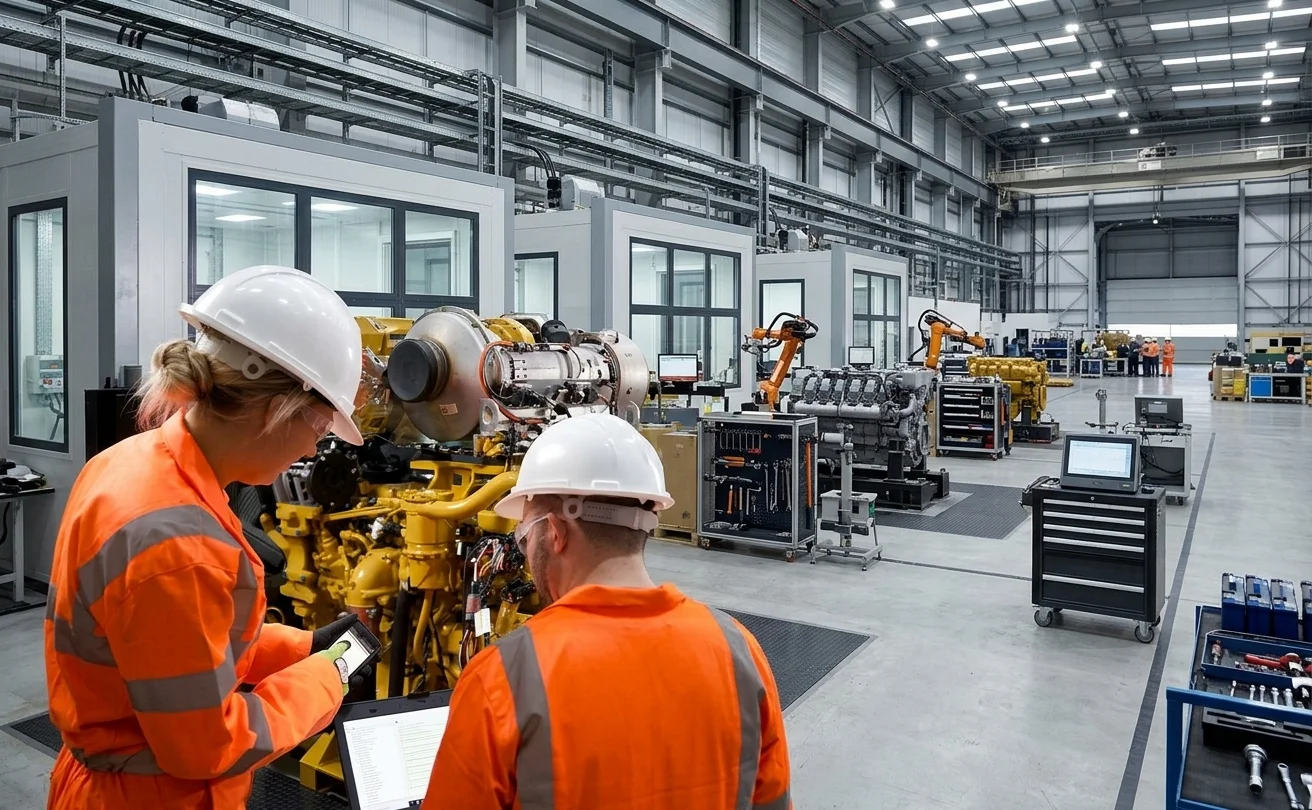
Choosing the right engine for your machinery starts with understanding the equipment’s power requirements, working load, fuel type, operating environment and mounting dimensions. Compare horsepower, torque, fuel consumption, maintenance needs and manufacturer specifications before buying. A correctly matched engine helps machinery run reliably without unnecessary fuel costs or mechanical strain.

Choosing the right engine helps machinery perform reliably and reduces unnecessary operating costs. An engine that does not provide enough power can struggle under load. An oversized engine may increase fuel consumption and purchase costs.

Before selecting an engine, understand how your machinery will be used. Consider its workload and daily operating hours. You should also check the required power output and the conditions in which the machine will operate.

What Power Does Your Machinery Need?

Start by checking the power requirements of your equipment. Every machine needs a specific amount of power to perform its intended tasks.

An engine with insufficient power may overheat or struggle during demanding operations. An engine with excessive power may add unnecessary cost.

Check the manufacturer’s recommended engine power before making a decision. Consider the following factors:

  • Power output: Make sure the engine can handle the machine’s workload.
  • Load requirements: Consider whether the machinery operates under light or heavy loads.
  • Operating hours: Equipment used for long periods may need an engine designed for continuous operation.
  • Performance demands: Machines that start and stop frequently may have different requirements from equipment that runs at a steady speed.

Always compare the engine’s rated power with the machinery manufacturer’s specifications.

Should You Choose a Petrol or Diesel Engine?

Petrol and diesel engines suit different applications. Your choice depends on the machinery type and how often it operates.

FeaturePetrol EngineDiesel Engine
Common useLight-duty equipmentHeavy-duty and industrial equipment
Fuel efficiencyOften lower under comparable loadsOften higher under comparable loads
TorqueSuitable for many lighter applicationsOften suited to demanding loads
MaintenanceDepends on engine design and useDepends on engine design and use
Initial costOften lowerOften higher

Petrol engines can be suitable for lighter equipment and applications where lower initial cost matters. Diesel engines are often preferred for industrial machinery that needs strong low-speed torque and regular operation.

However, fuel type alone should not determine your decision. Compare the engine specifications with the equipment’s requirements and expected workload. You can review the available engines and spare parts to compare ratings and specifications side by side.

Why Are Torque and Engine Speed Important?

Power is important but it is not the only specification to consider. Torque affects how well an engine handles resistance while engine speed determines how quickly it operates.

Machinery that handles heavy loads may require strong torque at lower engine speeds. Equipment that operates at a specific speed may need an engine with a compatible RPM range.

Before buying an engine check:

  • The required operating speed in RPM
  • The torque needed for the intended workload
  • Compatibility with the machine’s drive system
  • Whether the engine can handle starting loads and changes in demand

Choosing the correct torque and speed helps the machinery operate as intended and reduces the risk of performance problems.

How Does the Working Environment Affect Engine Choice?

The working environment can affect engine performance and service life. An engine used in a hot or dusty location may need more frequent inspection and maintenance.

Consider where the machinery will operate. Construction sites may expose engines to dust and vibration. Agricultural equipment may work in changing weather conditions. Industrial machinery may run for extended periods.

Check the following before selecting an engine:

  • Temperature: Confirm that the engine is suitable for the expected operating temperature.
  • Dust and debris: Check the air filtration requirements for dusty environments.
  • Ventilation: Ensure the engine has adequate airflow and cooling.
  • Operating conditions: Consider vibration and the amount of time the engine will run each day.
  • Maintenance access: Make sure routine servicing can be carried out easily.

Selecting an engine suited to the environment helps reduce avoidable wear and operating issues.

How Can You Check Whether an Engine Will Fit Your Machinery?

An engine may meet the power requirements but still be unsuitable if its dimensions or connections do not match the equipment.

Before replacing an existing engine compare the new model with the original engine specifications. Check its physical dimensions and mounting points. You should also verify the shaft size and direction of rotation where relevant.

Review these details before purchasing:

  • Engine dimensions and weight
  • Mounting arrangement
  • Shaft size and configuration
  • Fuel and exhaust connections
  • Cooling system requirements
  • Electrical connections and starting system

Do not rely on engine appearance alone. Confirm compatibility with the machinery manufacturer or a qualified supplier before installation.

How to Compare Engine Fuel Costs and Maintenance Requirements

The purchase price is only one part of the total cost of owning an engine. Fuel consumption and maintenance can affect your operating budget over time.

If the machinery runs for several hours each day even a small difference in fuel consumption may affect long-term costs. Regular servicing is also important for reliable operation.

When comparing engines consider:

  • Expected fuel consumption under your working load
  • Recommended oil and filter replacement intervals
  • Availability of spare parts
  • Local servicing support
  • Ease of routine maintenance
  • Warranty terms and service requirements

An engine with a lower purchase price may not be the most economical choice over its working life. Compare the expected operating costs as well as the initial investment.

Which Engine Model Should You Consider?

Choosing the right engine depends on your machinery’s power requirements, operating conditions, and intended application. Compare different engine models based on their performance, fuel efficiency, durability, and compatibility with your equipment rather than focusing on brand or price alone.

Before making a purchase, check the engine’s rated power, operating speed, mounting dimensions, and installation requirements. If you are replacing an existing engine, compare the specifications of the original model with those of the proposed replacement to ensure proper fit, reliable performance, and efficient operation.

What Should You Check Before Buying an Engine?

Use this checklist to review the main requirements before making your final decision.

  • Confirm the power required by your machinery.
  • Select a suitable fuel type.
  • Check torque and operating speed.
  • Verify engine dimensions and mounting points.
  • Consider the working environment.
  • Compare fuel consumption and maintenance costs.
  • Check spare parts availability and service support.
  • Confirm the warranty and installation requirements.

If you are unsure about compatibility ask a qualified supplier to review your machinery specifications. This can help you avoid purchasing an engine that does not meet your needs.

Conclusion: 

Choosing the right engine requires more than comparing prices or power ratings. You need to consider the machinery’s workload and operating environment. Fuel consumption and maintenance requirements also affect long-term value.

Compare the engine specifications with your equipment’s requirements before making a purchase. For help exploring suitable options visit Al Yaqeen Hardware and review the available engine information.

Get the right engine for your machine the first time

Send us your machine details and our team will check power, shaft, RPM and mounting before you order. You get clear advice on the right diesel or petrol engine, with no guesswork and no wrong fit on delivery day.

Frequently Asked Questions

How do I choose the correct engine size for my machinery?

Check the machinery manufacturer’s recommended power output and operating speed. Then compare the engine’s rated specifications with the workload and operating conditions.

Is a diesel engine better than a petrol engine for industrial machinery?

Diesel engines are often suitable for heavy-duty machinery and demanding workloads. Petrol engines may suit lighter applications. The best option depends on the equipment’s specifications and operating needs.

What should I check when replacing an existing machinery engine?

Compare power output and operating speed first. Then check the mounting points and dimensions along with shaft compatibility and fuel connections. Confirm the replacement is suitable for your machinery before installation.

Best Selling Engine Parts

Choosing the right engine is only the first step. Keeping it in good condition with the correct spare parts helps it run reliably and last longer. Here are popular parts for engines used in pumps, generators and other machinery.

types-of-pressure-washers-and-where-each-one-works-best

Types of Pressure Washers and Where Each One Works Best 

Pressure washers are sorted by power source (electric, petrol, cordless, diesel), water temperature (cold, hot, steam) and duty level (light, heavy, commercial). Electric and cordless models suit homes and small jobs, petrol and diesel models suit heavy outdoor work, and hot water or steam models cut grease. This guide covers the uses, pros and cons of each type, plus how to read PSI and GPM when comparing machines.

A dirty driveway, a dusty patio, a muddy car and a greasy workshop floor all call for a pressure washer, but not the same one. Knowing the types of pressure washers keeps you from buying too much power or too little.

Some machines run on electricity, some on fuel, and some heat the water before it hits the surface. Each has its own uses, pros and cons, and this guide covers all of them in plain terms so you can match the right machine to your job.

What Are the Different Types of Pressure Washers?

The main pressure washer types are electric, petrol, cordless, diesel, cold water, hot water and steam. They differ in power source, water temperature, mobility and cleaning strength. The right one depends on your surface, your dirt and whether power is available on site.

The table below compares the types of pressure washers at a glance.

TypeBest forStrengthLimitations
ElectricCars, patios, garden tools, home cleaningEasy to use, quiet, low maintenanceNeeds a power outlet
PetrolDriveways, large areas, heavy dirtHigh pressure, portable, no outlet neededLoud, higher maintenance, fumes
CordlessBikes, boots, quick tasksHighly portable, fast setupLow pressure, short runtime
DieselIndustrial sites, farms, fleetsVery powerful, long operationExpensive, heavy, high upkeep
Cold waterDust, mud, everyday dirtSimple and cost effectiveWeak on grease and oil
Hot waterGrease, oil, workshopsStrong degreasingCostly, heavier system
SteamDeep industrial cleaning, sanitisingExtreme cleaning powerVery costly, specialised

Which Pressure Washer Types Are Defined by Power Source?

Power source splits pressure washers into electric, petrol, cordless and diesel models. Electric suits homes, petrol and diesel suit heavy outdoor work, and cordless suits quick small tasks. These types of pressure washers trade convenience against power, so each fits a different working environment.

What Is an Electric Pressure Washer Used For?

An electric pressure washer uses a motor, so it starts easily and needs little maintenance. It suits cars, patios, fences, balconies and garden furniture where a socket is nearby. Household electric models commonly sit between 1,300 and 2,000 PSI.

Pros

  • Easy startup with no fuel
  • Lower maintenance than petrol or diesel
  • Quiet enough for residential areas

Cons

  • Needs a nearby power outlet
  • Cable length limits movement
  • Less force than engine driven models

When Is a Petrol Pressure Washer the Better Choice?

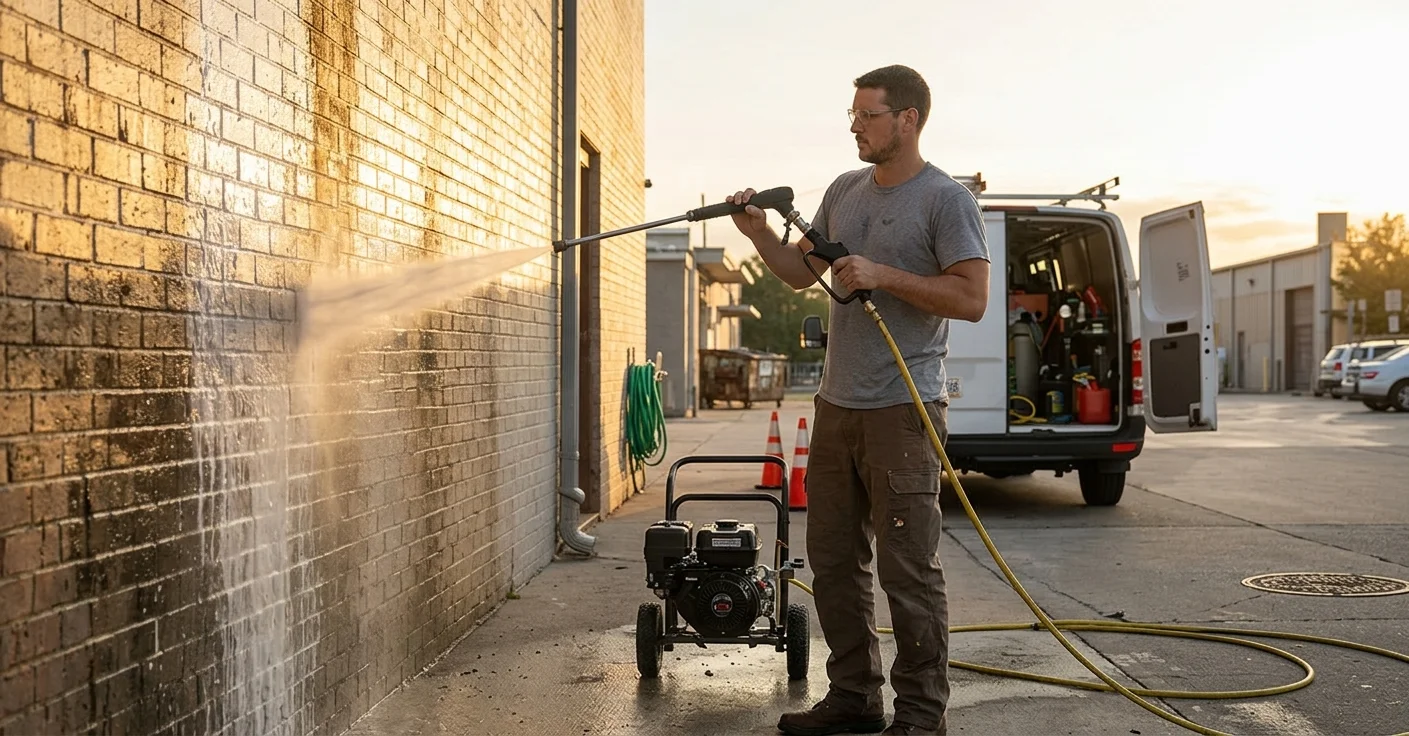
A petrol pressure washer is the better choice when power is unavailable or the job needs more force than an electric unit gives. Petrol models commonly deliver 2,000 to 4,000 PSI, which suits driveways, concrete, brick, muddy equipment and building sites.

Pros

  • Moves freely without a socket
  • Stronger pressure and flow than most electric models
  • Handles large outdoor areas

Cons

  • Never use indoors because of exhaust fumes
  • Louder than electric models
  • Needs fuel, oil checks and regular servicing

What Can a Cordless Pressure Washer Clean?

A cordless pressure washer cleans light jobs such as bicycles, camping gear, boots, garden tools and small vehicles. It runs on a battery, so it works anywhere. Many battery models top out around 600 PSI, so they cannot replace a corded or engine driven machine.

Pros

  • Easy to carry
  • Quick setup for small tasks
  • Works where no socket exists

Cons

  • Limited battery runtime
  • Lower cleaning force than corded models
  • Too weak for thick mud, large driveways or concrete

Do You Need a Diesel Pressure Washer?

Most households do not need a diesel pressure washer. It is built for professional, agricultural and industrial cleaning, such as trucks, tractors, loaders and fleet vehicles, where long operation matters more than size.

Pros

  • Suits long, repeated professional use
  • Good match for farms, yards and industrial sites
  • Can run heavy duty cold or hot water systems

Cons

  • Too large and costly for home users
  • Needs fuel management and engine servicing
  • Higher maintenance cost than electric washers

Which Pressure Washer Types Are Defined by Water Temperature?

Water temperature is the second way the types of pressure washers differ, splitting them into cold water, hot water and steam. Cold water handles everyday dirt, hot water cuts grease and oil, and steam gives the deepest industrial clean.

When Is a Cold Water Pressure Washer Enough?

A cold water pressure washer is enough for most everyday cleaning. It relies on pressure, flow and the right nozzle to remove dirt and dust from cars, patios, tiles and garden furniture. Electric, cordless, petrol and diesel models can all be cold water.

Pros

  • Simple and cost effective
  • No heating system to maintain
  • Practical for most home and garden tasks

Cons

  • Less effective on grease and oil
  • Slower on stubborn grime
  • Poor fit for workshops and greasy equipment

Why Choose a Hot Water Pressure Washer?

A hot water pressure washer heats the water before spraying, so it removes grease, oil and sticky grime much faster than cold water. It suits garages, workshops, factories and maintenance work where cold water cleans too slowly.

Pros

  • Better on grease and oil
  • May reduce detergent use
  • Faster for professional cleaning

Cons

  • More expensive than cold water models
  • Heavier because of the heating system
  • Hot water raises burn risk, so follow OSHA safety guidance

What Is a Steam Pressure Washer Best For?

A steam pressure washer uses very hot water or steam for deep cleaning and sanitising. It suits oily engines, machinery parts and factory surfaces, and its strength is heat rather than pressure alone.

Pros

  • Strong on grease and oily grime
  • Useful in industrial and automotive settings
  • Can reduce chemical use

Cons

  • Too specialised for most home cleaning
  • Costly and complex compared with standard washers
  • High temperatures need careful handling

How Does Duty Level Change Pressure Washer Choice?

Duty level groups pressure washers as light, heavy or commercial, and it overlaps with the main types of pressure washers. Light duty models reach roughly 1,900 PSI and 2 GPM, while heavy duty models reach about 2,800 PSI and 3 GPM. Commercial units go beyond that for daily work.

To compare machines fairly, multiply PSI by GPM to get cleaning units. A 3,000 PSI washer at 2.0 GPM and a 2,000 PSI washer at 3.0 GPM both score 6,000. The second rinses faster, while the first strips harder.

Match pressure to the surface too. High PSI can mark wood and stucco, so test a hidden spot first. You can compare machines from pressure washer suppliers UAE Sharjah buyers rely on.

Conclusion

Understanding the different types of pressure washers helps businesses select equipment that matches their cleaning requirements. Electric models are practical for routine maintenance, petrol and diesel machines offer mobility for outdoor work, and cold water units handle general dirt. Hot water pressure washers are particularly useful for removing many grease and oil deposits.

Before purchasing, compare working pressure, water flow, power source, temperature capability and maintenance requirements. Businesses looking for suitable cleaning equipment can explore the range available from Al Yaqeen Hardware and compare individual models against their site conditions and workload.

Find the right pressure washer for your job

Tell us what you clean, how often you clean it and what power is available on site. Our team will recommend the right pressure washer and give you a clear quote, so you buy the machine your work actually needs.

FAQs

What are the three main kinds of pressure washers?

By power source, the three main kinds are electric, petrol and diesel. Electric suits home use, petrol suits large outdoor jobs, and diesel suits industrial work. Cordless models are a lighter option for small tasks.

Is an electric or petrol pressure washer better?

Electric is better for home use because it is quieter, lighter and easier to maintain. Petrol is better when no outlet exists or when you need higher pressure for driveways, concrete and heavy mud.

Is PSI or GPM more important when choosing a pressure washer?

Both matter. PSI is the force that lifts dirt, and GPM is the flow that rinses it away. Multiply them to get cleaning units, which gives a fair way to compare two machines.

Read More Blogs From Al Yaqeen Hardware

  1. Industrial Machines: An Informative Guide to Types And Uses covers generators, welding machines, air compressors and pumps used across industrial sites.
  2. Important Factors to Know Before Investing in Power Tools breaks down what to check on power source, safety and durability before buying equipment.
  3. Best Air Compressor Brands and Suppliers in UAE compares leading brands to help you pick the right compressor for your site.
  4. Bar Bending Machine Benefits for Modern Construction Projects explains how the right bending equipment improves speed and accuracy on site.
  5. 5 Tips to Extend Your Bar Bending Machine’s Life shares practical upkeep habits that apply to power equipment generally.

koshin-pump-parts-and-maintenance-tips-for-gulf-job-sites

Koshin Pump Parts and Maintenance Tips for Gulf Job Sites

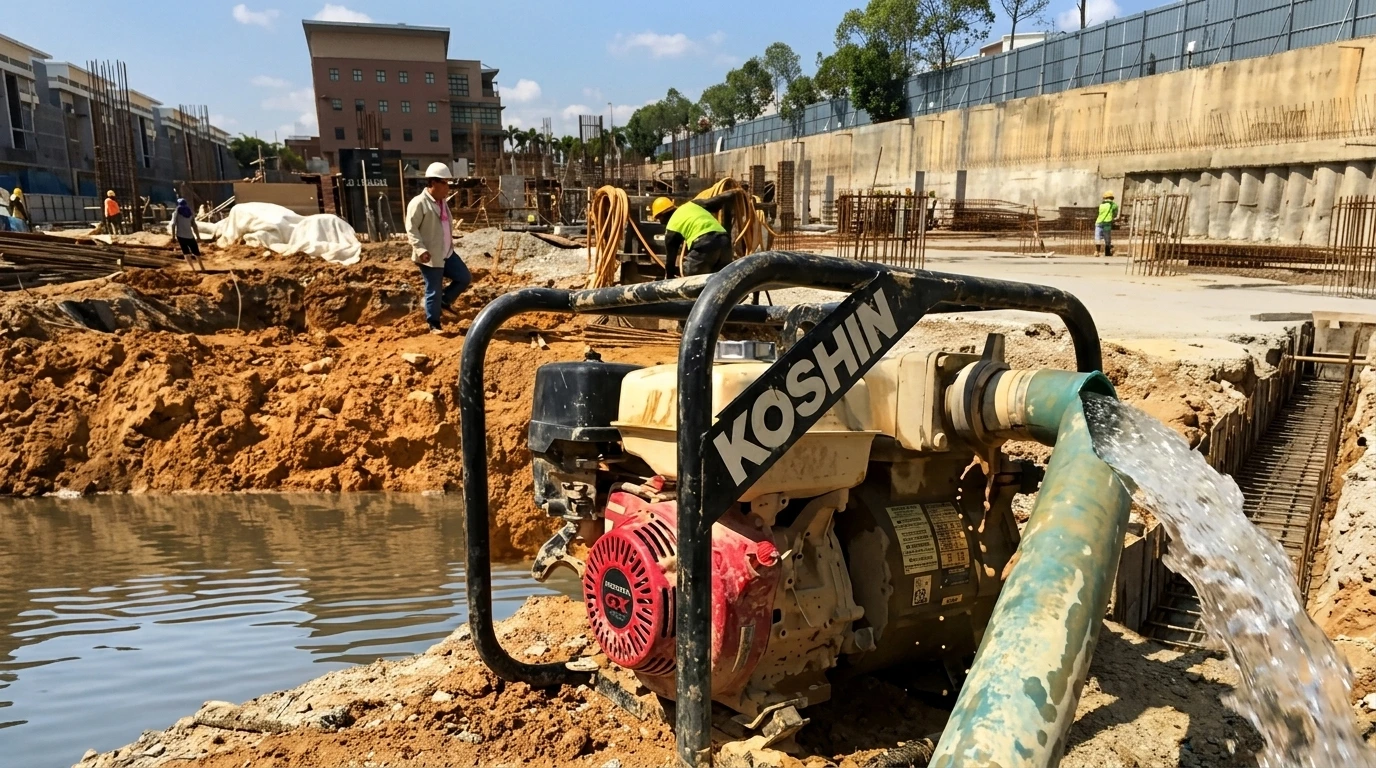
Running a Koshin pump in the Gulf means dealing with heat, sand and salty water every week. This guide walks you through which parts wear out first, how often to check them, how to spot faults early and what to confirm before buying spares, so your pump keeps working on the job instead of sitting in the workshop.

If you run a Koshin pump in the Gulf, you already know how hard the weather is on it. The summer heat is brutal, sand gets into everything, and the water on site is often dirty or salty. A small problem like a leaking seal or a blocked air filter can quickly turn into a pump that loses pressure or will not start.

This Koshin pumps parts and maintenance guide for Gulf markets keeps things practical. You will see which parts wear out first, how often to check them and how to buy the right spares, so your pump keeps working when the job needs it.

What Are the Main Parts of a Koshin Pump?

A Koshin engine pump has two working halves. The engine supplies power, and the pump end moves water through an impeller, a casing and a set of seals. Everything else, from the frame to the hose fittings, supports those two jobs.

Knowing this layout makes fault finding much faster.

  • Engine with spark plug, air filter, fuel filter and recoil starter
  • Impeller that spins and builds pressure
  • Volute casing that guides the water out
  • Mechanical seal that keeps water away from the engine side
  • Gaskets and O rings between the casing sections
  • Suction and discharge fittings, plus the strainer
  • Steel frame that keeps the unit stable and protected

How Do Gulf Heat, Sand and Salt Affect Koshin Pump Parts?

Heat, airborne sand and abrasive or salty water all shorten the life of Koshin pump parts in the Gulf. Heat hardens rubber seals and thins engine oil. Sand clogs air filters and scratches the impeller. Salt speeds up corrosion on bolts, fittings and the casing.

Heat Stress on the Engine

Engines running in direct summer sun often overheat when the cooling fins are packed with dust. Oil also loses protection faster at high temperature, so oil changes matter more here than the minimum interval in a manual might suggest.

Sand and Salt Damage on the Pump End

Pumping from a trench, a tank bottom or a coastal source pulls fine solids into the casing. These wear the impeller edges and the seal faces. Flushing the pump with clean water after each job removes most of the salt before it settles.

Which Koshin Pump Parts Need Replacing Most Often?

The mechanical seal, impeller, gaskets, spark plug and filters wear out first on a Koshin pump. These parts touch water, sand, heat or fuel directly. Keeping a small spare set of each on the shelf prevents most unplanned stoppages on site.

PartSign of WearWhen to Check
Mechanical sealDrips near the shaftWeekly during heavy use
ImpellerLow pressure, rough noiseEvery season or after sandy jobs
Gaskets and O ringsAir leaks, lost primeWhenever the casing is opened
Spark plugHard starting, misfireEvery service
Air filterBlack smoke, low powerBefore every shift in dusty areas
Hoses and clampsCracks, soft spotsBefore each job

How Often Should You Service a Koshin Pump in the Gulf?

Check the pump before every job, inspect it more closely each week during heavy use, and service the whole unit at the interval in your Koshin manual. In Gulf conditions, shorten that interval if the pump runs in dust or on salty water.

Daily and Weekly Checks

  • Check engine oil and fuel level
  • Look at the air filter and shake out loose dust
  • Inspect hoses, clamps and the suction strainer
  • Flush the pump with clean water after use

Seasonal and Storage Checks

Before summer, open the casing and look at the impeller and wear faces. Replace any gasket that has hardened. Drain old fuel if the pump will sit idle, because stale fuel gums up the carburetor quickly in hot storage yards.

This routine is the practical core of any Koshin pumps parts and maintenance guide for Gulf markets. Small checks done often cost far less than a seized seal in August.

How Do You Troubleshoot Common Koshin Pump Faults?

Most Koshin pump faults come from three places. Air is getting into the suction line, a part is worn, or the engine is not getting clean fuel and air. Work through them in that order before stripping anything down.

  • No water or lost prime. Check the suction hose, clamps and casing gasket for air leaks, and fill the casing before starting.
  • Low pressure. Look for a blocked strainer, a worn impeller or a kinked hose.
  • Water at the shaft. The mechanical seal is likely worn and needs replacing.
  • Hard starting. Inspect the spark plug, fuel quality and air filter.
  • Overheating. Clear dust from the engine fins and confirm the oil level.

Pump performance testing in the industry follows standards such as ISO 9906. If a unit seems well below its rated output, compare it with the figures in the Koshin datasheet before blaming the site. A solid Koshin pumps parts and maintenance guide for Gulf markets should always start with the datasheet.

How Do You Choose the Right Koshin Pump Spare Parts?

Match spare parts by pump model and serial details, not by size alone. A seal or impeller that looks similar can differ in shaft diameter, vane shape or material. Buying from an authorised source gives you the correct part number and a record to work from.

A reliable Koshin pump supplier can confirm compatibility before you order, which matters when a rental unit is waiting in the yard. Keep the model number from the pump plate handy when you ask.

It also helps to stock a basic service kit for each model. A seal, gasket set, spark plug and filter cover most common repairs. If you manage several units, standardise on a few models so your spares overlap.

Storage matters too. Keep rubber parts in a cool, shaded place, because gaskets and seals left in a hot container can harden before they are ever fitted.

Final Thoughts:

Koshin pumps are built for tough work, and the Gulf tests that claim every day. Regular checks, quick flushing, clean filters and fresh seals keep them delivering steady flow through the hottest months. This Koshin pumps parts and maintenance guide for Gulf markets comes down to one habit, which is catching small wear before it becomes a breakdown.

For genuine Koshin pump spares, replacement components and product information, you can also explore the range available from Al Yaqeen Hardware.

Need the Right Koshin Pump Parts?

Share your Koshin pump model and the part you need. Our team can help you identify the right replacement, check compatibility, and confirm availability before you place your order.

FAQs

What Causes a Koshin Pump to Lose Pressure?

Low pressure usually comes from air leaking into the suction line, a clogged strainer or a worn impeller. Check hose connections and gaskets first, then clean the strainer. If pressure is still weak, open the casing and inspect the impeller for wear or damage.

How Often Should You Change the Oil in a Koshin Engine Pump?

Follow the interval in your Koshin manual, including the first oil change after the break-in period. In hot, dusty Gulf conditions, change the oil sooner than the minimum because heat thins oil and dust can contaminate it faster.

Can a Koshin Pump Handle Dirty or Salty Water?

Many Koshin models suit clean or lightly dirty water, while some are designed for trash or higher solids. Check the model rating first. After pumping salty or silty water, flush the pump with fresh water to help protect the seal, impeller and casing from corrosion.

Read More Blogs From Al Yaqeen Hardware

  1. Industrial Machines: An Informative Guide to Types And Uses covers generators, welding machines, air compressors and pumps used across industrial sites.
  2. Important Factors to Know Before Investing in Power Tools breaks down what to check on power source, safety and durability before buying equipment.
  3. Best Air Compressor Brands and Suppliers in UAE compares leading brands to help you pick the right compressor for your site.
  4. Bar Bending Machine Benefits for Modern Construction Projects explains how the right bending equipment improves speed and accuracy on site.
  5. 5 Tips to Extend Your Bar Bending Machine’s Life shares practical upkeep habits that apply to power equipment generally.

Search for products

Back to Top
Product has been added to your cart
Compare (0)