UAE’s one-stop shop for tools, power & hand tools, water, sewage & vacuum pumps, air compressors & generators.
piston-vs-screw-compressor

Piston vs Screw Compressor — Which Is Right for Your Workshop?

Choosing the right air compressor is one of the most important decisions for any workshop, factory, or industrial operation. Performance, energy consumption, and long-term maintenance costs all depend on whether you select a piston compressor or a screw compressor.

Both technologies are widely used across industries such as manufacturing, construction, automotive repair, and general maintenance. However, they operate differently and are designed for different workloads and usage patterns.

What Is an Air Compressor and Why It Matters?

An air compressor is a machine that converts mechanical energy into compressed air by reducing air volume and increasing pressure. This compressed air is used to power tools, machinery, and industrial systems.

Air compressors are widely used across construction, automotive workshops, manufacturing units, and maintenance industries. Choosing the right type directly impacts efficiency, productivity, and operating cost.

What Is a Piston Compressor?

A piston compressor, also known as a reciprocating compressor, works using a piston and cylinder mechanism. The piston moves back and forth to compress air in cycles instead of delivering continuous airflow.

It is commonly used in light-duty applications where air demand is intermittent. Piston compressors are popular because they are simple, affordable, and easy to maintain.

Key Characteristics of Piston Compressor

  • Works in intermittent cycles
  • Suitable for low to medium air demand
  • Lower initial cost
  • Simple mechanical structure

However, piston compressors are not ideal for continuous industrial use due to higher noise, more wear, and lower energy efficiency over long operation periods.

What Is a Screw Compressor?

A screw compressor operates using two interlocking rotors that continuously compress air. Unlike piston systems, it delivers a stable and uninterrupted airflow, making it suitable for industrial applications.

Key Characteristics of Screw Compressor

  • Continuous air supply
  • High energy efficiency for long operations
  • Low noise compared to piston systems
  • Reduced maintenance frequency

Although the initial investment is higher, screw compressors provide better long-term efficiency and reliability.

Piston vs Screw Compressor: Key Differences

FeaturePiston CompressorScrew Compressor
Usage TypeDesigned for intermittent operationDesigned for continuous operation
Energy EfficiencyConsumes more energy in long operationsHighly optimized for energy efficiency
Noise LevelHigher noise due to reciprocating movementLower noise and smoother operation
MaintenanceRequires frequent maintenanceRequires scheduled maintenance at longer intervals
CostLower initial costHigher initial cost but better long-term value

Which Compressor Should You Choose?

Choose a piston compressor if:

  • You run a small workshop
  • Air demand is occasional
  • Budget is limited
  • Continuous operation is not required

Choose a screw compressor if:

  • You need continuous air supply
  • You operate industrial systems
  • Energy efficiency is important
  • Downtime must be minimized

Total Cost of Ownership Matters More Than Price

When selecting a compressor, the initial price is only one part of the decision. Electricity usage, maintenance cost, downtime impact, and spare parts availability all contribute to total cost.

Piston compressors are cheaper initially but may become expensive in high-usage conditions. Screw compressors cost more upfront but are more economical over long-term operation.

Maintenance Comparison

Piston compressors require regular oil checks, valve servicing, and replacement of worn mechanical parts due to higher friction and movement.

Screw compressors require oil and filter replacement along with scheduled inspections but offer longer service intervals and higher stability.

Why Businesses Prefer Screw Compressors

Businesses prefer screw compressors because they provide stable performance, lower energy consumption, and reduced downtime. Their continuous operation capability makes them ideal for demanding applications where reliability is critical.

Conclusion:

Selecting between a piston compressor and a screw compressor ultimately comes down to the nature of your workload, the type of application, and the expected long-term performance requirements.

Piston compressors are best suited for light-duty and intermittent applications where cost-effectiveness and simplicity are the main priorities. In contrast, screw compressors are designed for continuous and demanding industrial operations where reliability, efficiency, and consistent air supply are critical.

Making the right choice ensures better system performance, improved energy efficiency, lower maintenance costs, and greater operational stability over time.

For additional technical information, industrial equipment solutions, and professional support, you can visit Al Yaqeen’s official website

Explore More Industrial Guides & Articles

If you are planning to upgrade or build your workshop or industrial setup, you may also find these guides helpful:

choosing-the-right-power-trowel-for-your-concrete-project

How to Choose the Right Power Trowel for Your Concrete Project

A power trowel is one of the most important tools in concrete finishing, directly influencing how smooth, durable, and professional the final surface will be. Whether you are working on a small residential slab or a large industrial floor, the type of power trowel you choose can significantly impact speed, labor effort, and finish quality.

Choosing the wrong machine often leads to uneven surfaces, delays, and higher costs. This guide explains everything in a simple, practical way so you can confidently select the right power trowel for your concrete project based on real construction needs and field experience.

What is a Power Trowel?

A power trowel is a concrete finishing machine used to smooth, level, and polish freshly poured concrete surfaces. It works by rotating blades at high speed over the surface, helping compact the concrete and create a dense, durable finish.

It is widely used in commercial, industrial, and residential construction because it saves time and ensures a consistent finish that is difficult to achieve manually.

Types of Power Trowels

Power trowels come in different types depending on project size and usage requirements. Understanding each type helps you choose the most efficient option for your job.

These machines are generally divided into three main categories based on control method and application needs.

Walk-Behind Power Trowel

Walk-behind trowels are operated manually and are ideal for smaller or more detailed work areas.

In practical site use, contractors often prefer compact models like the Robin power trowel SM-60 for small residential floors due to its easy handling and smooth finishing in tight spaces. For larger slabs needing walk-behind control with higher output, the Robin power trowel SM-100 is preferred for stronger performance and wider coverage. 

Best for:

  • Small to medium-sized floors
  • Residential projects
  • Tight spaces or corners

Advantages:

  • Easy to operate
  • More control over finishing
  • Lower cost compared to ride-on machines

Limitations:

  • Slower for large areas
  • Requires physical effort from operator.

Ride-On Power Trowel

Ride-on trowels are designed for large-scale projects where speed and efficiency are important.

Best for:

  • Large industrial floors
  • Warehouses
  • Commercial construction sites

Advantages:

  • Faster finishing speed
  • Covers large areas efficiently
  • Reduces operator fatigue

Limitations:

  • Higher cost
  • Requires experienced operator
  • Less effective in tight corners

Edging Trowel

Edging trowels are smaller tools used for finishing corners and edges that larger machines cannot reach.

Best for:

  • Finishing edges of slabs
  • Small detailed areas
  • Touch-up work

Key Selection Factors for Choosing a Power Trowel

Choosing the right power trowel is not just about size or price. Several technical and practical factors determine performance, finish quality, and efficiency on-site.

Project Size and Scope

Project size is the most important factor in selecting a power trowel. For smaller residential jobs or tight working spaces, walk-behind models are the most practical choice, especially for areas up to 1,000 square feet. They provide better control and are easier to maneuver in compact environments.

For larger industrial or commercial projects, ride-on trowels are far more efficient. They significantly reduce finishing time and allow operators to cover wide open areas quickly without compromising quality.

Blade Size and Type

The diameter of the blade directly affects how much surface area the machine can cover in a single pass. Larger blades are more suitable for open, spacious areas because they reduce finishing time and improve productivity.

Smaller blades, on the other hand, are better suited for detailed work, edges, and confined areas where precision matters more than speed.

Float Blades

Float blades are used during the initial stage of concrete finishing. Their purpose is to flatten and level the surface after the concrete has been poured and partially set. This rough pass helps remove high spots and prepares the surface for further refinement.

They are essential for ensuring a strong, even base before final polishing begins.

Finish Blades

Finish blades are used after floating is complete. Their main role is to polish the surface and create a smooth, dense, and professional finish. These blades operate at higher speeds and apply more pressure to achieve a refined surface texture.

They are crucial for achieving a high-quality, visually appealing concrete floor.

Combo Blades

Combo blades offer flexibility by combining both floating and finishing functions. They are ideal for contractors who want a versatile solution without switching blades frequently.

These blades save time and improve efficiency, especially on medium-sized projects where both rough and fine finishing are required.

Engine Power

Engine type plays a major role in performance and suitability for different environments. Gasoline-powered engines are commonly preferred for their strength, portability, and ability to handle large outdoor projects with ease.

Electric models are more suitable for indoor applications where ventilation is limited and fumes must be avoided. They offer cleaner operation but may have limited mobility depending on power supply availability.

Maneuverability

Maneuverability is often overlooked but is extremely important for operator comfort and efficiency. Machines with ergonomic handles, balanced weight distribution, and smooth control systems reduce operator fatigue and improve accuracy during long working hours.

A well-designed trowel allows better control, leading to more consistent and professional finishing results.

Common Mistakes When Selecting a Power Trowel

Many construction teams make avoidable errors when choosing equipment.

  • Selecting based only on cost instead of performance needs
  • Using walk-behind machines for very large projects
  • Ignoring operator skill requirements for ride-on units
  • Overlooking blade compatibility and maintenance needs

Avoiding these mistakes ensures better productivity and long-term savings.

Practical Insight from Field Experience

On many commercial job sites, a combination of walk-behind and ride-on trowels delivers the best results. Ride-on machines handle the main floor area efficiently, while walk-behind units are used for corners and edges.

This balanced approach reduces finishing time while maintaining high surface quality across the entire slab.

Benefits of Choosing the Right Power Trowel

  • Faster project completion
  • Better surface smoothness and durability
  • Reduced labor and operational effort
  • Improved consistency in finishing quality
  • Lower long-term maintenance costs

AI Overview

Choosing the right power trowel ensures smooth, durable concrete finishes by matching project size, blade type, and engine power for efficient, high-quality construction results.

FAQs

What is the best power trowel for large concrete floors?

Ride-on power trowels are best for large floors as they cover wide areas quickly and reduce finishing time. They are ideal for industrial and commercial construction projects.

What is the difference between float blades and finish blades?

Float blades are used for initial leveling of fresh concrete to remove high spots. Finish blades are used later to polish and create a smooth, refined surface.

Can a beginner operate a power trowel?

Walk-behind power trowels can be handled by beginners with basic training and practice. Ride-on models require more experience for safe and effective operation.

How do I choose the right power trowel size?

Choose based on project size, smaller walk-behind units for residential work and larger ride-on machines for big commercial areas. Blade size and engine power also play a key role.

Conclusion

Choosing the right power trowel is essential for achieving strong, smooth, and long-lasting concrete surfaces. 

As modern construction standards continue to rise, using the right equipment ensures consistent, professional results that meet both structural and visual expectations in residential, commercial, and industrial projects.

Ready to Upgrade Your Concrete Finishing Equipment?

For contractors, builders, and industrial professionals looking for reliable, high-performance tools and construction equipment, Al Yaqeen Hardware provides trusted solutions, quality products, and expert support to help you complete every project with efficiency and confidence.

Contact our power trowel experts for trusted guidance, quality equipment, and reliable support to complete every project with precision and efficiency. 

Expand Your Knowledge: Related Industry Guides

types-of-welding-machines-and-how-to-choose-the-right-one

Types of Welding Machines & How to Choose the Right One

Welding machines are essential tools in metal fabrication, construction, automotive repair, and manufacturing. They are used to join metals by applying heat, pressure, or both, creating strong and permanent bonds. According to industrial welding classifications, most common welding processes fall under three major categories: MIG, TIG, and Stick welding, which together dominate a large share of industrial applications worldwide due to their versatility and reliability in different environments .

Choosing the right welding machine is not just about price or brand. It depends on material type, project scale, required weld quality, and working conditions. Understanding each machine type helps ensure stronger welds, better productivity, and lower operational costs.

Main Types of Welding Machines

MIG Welding Machine (Metal Inert Gas or GMAW)

How MIG Welding Works

MIG welding uses a continuously fed wire electrode that melts to form the weld joint. A shielding gas, usually a mix of argon and carbon dioxide, protects the weld pool from contamination. This semi automatic process makes MIG welding fast and relatively easy to learn .

Key Features

  • Continuous wire feed system
  • Uses shielding gas
  • High welding speed
  • Suitable for thin to medium thickness metals

Advantages

  • Easy to learn, beginner friendly
  • High productivity and fast welding speed
  • Produces clean welds with minimal slag

Limitations

  • Less effective in outdoor windy environments due to gas shielding
  • Not ideal for very thick industrial materials without multiple passes

Common Applications

  • Automotive repair
  • Structural steel fabrication
  • General manufacturing
  • Light industrial work

Industry Insight

In fabrication workshops, MIG welding is often preferred for repetitive production tasks because it significantly reduces welding time compared to manual methods.

Many workshops upgrade their workflow efficiency using advanced Edon welding machines, known for stable arc performance and beginner friendly operation in industrial environments.

TIG Welding Machine (Tungsten Inert Gas or GTAW)

How TIG Welding Works

TIG welding uses a non consumable tungsten electrode to create the arc. The welder manually adds filler rod while controlling heat and arc stability. Shielding gas protects the weld area. This process is known for precision and high quality results .

Key Features

  • Non consumable tungsten electrode
  • Separate filler rod
  • High control over heat input
  • Works on AC and DC power depending on material

Advantages

  • Extremely high precision
  • Produces clean and visually perfect welds
  • Works on a wide range of metals including stainless steel and aluminum
  • Ideal for thin materials

Limitations

  • Requires high skill level
  • Slower process compared to MIG and Stick
  • Lower productivity for large scale projects

Common Applications

  • Aerospace components
  • Food grade stainless steel piping
  • High precision automotive parts
  • Artistic metal fabrication

Industry Insight

Experts often describe TIG welding as the “highest skill level” process because it requires both hands and precise heat control. It is commonly used where weld quality is more important than speed.

Stick Welding Machine (Shielded Metal Arc Welding or SMAW)

How Stick Welding Works

Stick welding uses a flux coated electrode that melts during welding. The flux produces shielding gases and slag that protect the weld pool. It is one of the oldest and most robust welding methods.

Key Features

  • Flux coated consumable electrode
  • No external shielding gas required
  • Works on AC or DC power
  • Highly portable equipment

Advantages

  • Excellent for outdoor and harsh environments
  • Works on rusty or dirty materials
  • Simple and cost effective equipment
  • Strong weld penetration

Limitations

  • Produces more slag and requires cleaning
  • Slower than MIG welding
  • Less precise compared to TIG

Common Applications

  • Construction sites
  • Pipeline welding
  • Heavy structural steel work
  • Maintenance and repair work

Industry Insight

Stick welding is widely used in field conditions such as construction and pipeline work because it is resistant to wind and does not require gas cylinders.

Emerging and Specialized Welding Machines

Flux Core Arc Welding (FCAW)

Similar to MIG but uses flux core wire instead of external gas. It is more effective in outdoor conditions and heavy fabrication.

Laser Welding Machines

Uses concentrated laser beams for extremely precise and high speed welding. Common in robotics and advanced manufacturing industries.

Resistance Welding Machines

Uses pressure and electric current instead of filler material. Often used in mass production like automotive assembly lines.

Key Factors to Choose the Right Welding Machine

  • Material Type:
    Steel and thick metals suit MIG or Stick welding, while stainless steel and aluminum require TIG for precision. Thin sheets can use MIG or TIG depending on speed or finish needs.
  • Welding Environment:
    MIG and TIG work best indoors with stable conditions, while Stick or flux core welding is better for outdoor or windy environments.
  • Skill Level:
    Beginners prefer MIG for ease of use, intermediates use Stick for versatility, and advanced welders choose TIG for precision control.
  • Speed vs Quality:
    MIG is best for fast production, TIG delivers the highest quality finish, and Stick offers a balance for heavy duty field work.
  • Budget:
    Stick welding is the most affordable, MIG offers mid range value, and TIG or automated systems require higher investment for premium results

When to Choose Each Welding Machine

Choose MIG Welding When:

  • You need fast welding speed for production, automotive, or fabrication work
  • You are working in a clean indoor environment with mild to medium thickness metals

Choose TIG Welding When:

  • You need the highest weld quality, precision, and clean finishing work
  • You are working with stainless steel, aluminum, or thin and delicate materials

Choose Stick Welding When:

  • You are working outdoors or in harsh environments like construction sites or pipelines
  • You need to weld thick, rusty, or dirty metals where gas shielding is not practical

Comparison of Welding Machines (Decision Table)

Welding Type Best For Material Suitability Environment Skill Level Key Advantage Main Limitation
MIG Welding Automotive, fabrication, manufacturing Mild steel, thin to medium metals Indoor or controlled spaces Beginner to intermediate Fast welding speed and easy learning Not suitable for windy outdoor conditions
TIG Welding Aerospace, stainless steel, precision work Stainless steel, aluminum, thin metals Indoor controlled environment Advanced Highest weld quality and precision Slow and skill intensive
Stick Welding Construction, pipelines, repair work Thick steel, rusty or dirty metals Outdoor and harsh environments Intermediate Works without gas, highly durable Produces slag and requires cleaning

This comparison helps buyers quickly identify the right machine based on application, skill level, and environment.

For contractors and fabricators looking to invest in reliable performance tools, explore durable Powertex welding machines engineered for consistent output in demanding job sites.

Main Insights (Expert View)

  • No single welding machine is best for all jobs, selection depends on speed, cost, and quality requirements
  • MIG welding is widely used in industry due to high speed and easy automation in production lines
  • TIG welding is the standard for precision work where appearance and weld strength are critical
  • Stick welding remains essential for outdoor and field work due to its durability and reliability

Top Products You Should Consider

AI Overview

This blog explains types of welding machines including MIG, TIG, and Stick welding, their uses, advantages, and how to choose the right one based on material, skill level, and working conditions for better efficiency and results.

FAQs

What is the best welding machine for beginners?

MIG welding is the best option for beginners because it is easy to learn and provides consistent results. It requires less manual control compared to TIG and Stick welding.

What is the difference between MIG and TIG welding?

MIG welding is faster and easier, making it suitable for production work and beginners. TIG welding is slower but offers higher precision and cleaner weld quality.

Which welding machine gives the strongest weld?

Stick welding generally provides deep penetration and strong welds, especially on thick and heavy materials. However, strength also depends on skill and proper technique.

Which welding machine is most expensive?

TIG welding machines are usually the most expensive due to their precision, advanced controls, and need for skilled operation. MIG and Stick machines are more affordable options.

Conclusion

Choosing the right welding machine depends on understanding your material, environment, skill level, and project requirements. MIG welding is ideal for speed and general fabrication, TIG welding delivers unmatched precision for high quality work, and Stick welding remains the most reliable option for outdoor and heavy duty applications. Each type plays a specific role in modern welding, and professionals often use a combination of machines to achieve the best results in different conditions.

For contractors, fabricators, and industrial buyers looking for reliable, high performance welding machines and equipment, Al Yaqeen Hardware is a trusted supplier providing quality solutions and expert support to help you complete every project efficiently and with confidence.

Contact our welding machine experts for trusted products, technical support, and the right equipment for every project need.

tested-5-diesel-pumps-on-uae-sites-what-worked-best

I Tested 5 Diesel Pumps on UAE Sites — Here’s What Worked

In the fast-paced industrial and construction environment of the United Arab Emirates, having reliable diesel pumps is critical. From large construction projects in Dubai and Abu Dhabi to remote desert sites, efficient fuel and water transfer keeps operations running smoothly.

In this hands‑on review I tested five widely used diesel pumps across different UAE sites including construction yards, remote refueling points and industrial facilities. My goal was straightforward: evaluate each pump for performance, reliability, ease of use, and suitability for real‑world UAE conditions.

Here’s what I found.

Why Pump Selection Matters in UAE Sites

Diesel operated pumps are more than just fuel movers. On UAE sites, they must withstand extreme heat, sand, dust, and heavy workloads. The right pump saves time, reduces downtime, and ensures safety. 

Flow rate is important, but durability, ease of maintenance, and suitability for mobile or stationary setups are equally critical.

The Five Pumps I Tested

1. Koshin Yanmar Diesel Series

This series is designed for medium-duty diesel-powered pumping. Built to handle tough outdoor conditions, these pumps are ideal for construction sites, industrial areas, and remote locations. They deliver steady flow rates, resist high temperatures, and offer reliable long-term performance.

Why It Worked

  • Durable diesel engines with proven reliability in high-temperature environments
  • Suitable for both stationary and semi-mobile operations
  • Easy maintenance and readily available spare parts

Best Use Cases

  • Refueling machinery and generators on construction sites
  • Water transfer from storage tanks
  • Remote operations without electrical power

2. Honda Koshin Series

The Honda Koshin series consists of gasoline-powered centrifugal pumps that are lightweight and portable, making them ideal for smaller-scale or temporary water transfer tasks. They offer clean, efficient pumping with excellent self-priming capability.

Why It Worked

  • Portable and easy to handle for temporary or mobile setups
  • Reliable performance with minimal downtime
  • Lightweight construction for easy transport across sites

Best Use Cases

  • Temporary dewatering of trenches or excavation sites
  • Irrigation or water supply for short-term needs
  • Locations without diesel availability or where electricity is absent

3. Koshin Robin Diesel Series

The Koshin Robin Diesel series includes heavy-duty diesel pumps that deliver higher flow rates for large-scale water or fuel transfer. These pumps excel in industrial environments that demand sustained operation over long periods.

Why It Worked

  • High flow capacity suitable for large industrial sites
  • Rugged frame and mechanical seals for extreme durability
  • Efficient diesel engines for long operation without frequent refueling

Best Use Cases

  • Large water transfer operations
  • Dewatering large areas on construction or industrial sites
  • Continuous duty in hot, dusty, or sandy conditions

4. PIUSI Carry Panther

For mobile refueling, the PIUSI Carry Panther is unmatched. Its compact design and 12/24 V capability make it perfect for remote desert sites or mobile operations.

Why It Worked

  • Highly portable for rapid deployment
  • Easy to operate and maintain in field conditions
  • Ideal for small to medium fuel transfer tasks

Best Use Cases

  • Mobile fuel supply for machinery in remote areas
  • Temporary site refueling operations

5. Double Diaphragm Pumps

Safety-focused double diaphragm pumps proved their worth in hazardous environments. These air-driven pumps eliminate spark risks, making them ideal for sites with strict safety regulations.

Why It Worked

  • Safe for flammable or sensitive areas
  • Easy to maintain with minimal mechanical parts
  • Reliable in moderate flow applications

Best Use Cases

  • Fuel or chemical transfer in hazardous zones
  • Industrial sites requiring high safety standards

Final Observations

Testing these five pump types under real UAE conditions revealed that there is no single solution. The choice depends on your specific operational needs:

  • Koshin Yanmar Diesel series for medium-duty diesel pumping
  • Honda Koshin series for portable and temporary water tasks
  • Koshin Robin Diesel series for heavy-duty, continuous duty operations
  • PIUSI Carry Panther for mobile fuel transfer
  • Double diaphragm pumps for safety-critical applications

By selecting the right series for your application, you can improve efficiency, reduce downtime, and ensure smooth site operations even under extreme UAE conditions.

Comparison Table: Pump Series Performance & Best Use Cases

Pump Series Type Power Source Typical Flow/Capacity Ideal Applications Strengths
Koshin Yanmar Diesel Series Centrifugal Engine‑Driven Diesel Medium to High (e.g., SEY‑series up to ~1250 L/min) Construction site water transfer, fuel delivery where electric power isn’t available Durable diesel engines, long runtime, robust for hot/dusty environments
Honda Koshin Series Centrifugal Engine‑Driven Gasoline / Diesel Medium (varies by model) Temporary or portable water transfer, dewatering, irrigation Portable builds, reliable engines, good for intermittent jobs
Koshin Robin Diesel Series Centrifugal Engine‑Driven Diesel Medium to High (SE80XD type flow) Heavy‑duty site dewatering and high‑volume transfer High flow capacity and longer continuous runtime
PIUSI Carry Panther Diesel Transfer Pump 12/24 V DC Varies by configuration Mobile site refueling & vehicle/plant equipment Excellent portability, quick set‑up
Double Diaphragm Pumps Positive Displacement Air‑Driven Moderate Hazardous fuel or chemical transfer Minimal ignition risk, strong in safety‑critical zones

Expert Insights

Selecting the right diesel pump requires more than just choosing a popular brand. Experts recommend considering flow rate, duty cycle, and fuel type to ensure consistent performance on UAE sites where heat, dust, and continuous operation are common. Centrifugal pumps from established brands like Koshin are proven to deliver reliable water transfer, while diaphragm pumps are better for thicker or debris-laden fluids.

Industry professionals also emphasize buying from globally recognized manufacturers to guarantee service support and spare parts availability. For detailed guidance, Koshin provides a comprehensive pump selection guide used worldwide, which helps engineers and site managers choose the right pump for their specific needs.

Top Diesel Pump Series Products

Selecting the right diesel pump is essential for UAE sites, where extreme heat, dust, and heavy workloads are common. Here are the leading pump series available locally, with top products in each.

Koshin Yanmar Diesel Series

Honda Koshin Series

Koshin Robin Diesel Series

AI Overview

Explore the performance of top diesel pump series in UAE construction and industrial sites, comparing Koshin Yanmar, Honda Koshin, and Robin Diesel pumps for efficiency, durability, and reliability.

FAQs

How to test a diesel injector pump?

Check fuel delivery and pressure using a calibrated test bench or gauge. Observe spray pattern and timing to ensure proper operation.

How do diesel transfer pumps work?

They move diesel from storage to equipment using engine-driven or electric-driven pumping mechanisms. Flow is maintained via suction and discharge ports.

What pumping principle is used by hand actuated priming pumps on most current diesel fuel subsystems?

Hand priming pumps use positive displacement to manually draw fuel into the system. This ensures air-free fuel supply for starting engines.

How do I know if my diesel primer pump is bad?

Signs include difficulty starting the engine, air in fuel lines, or fuel leaks. Reduced or no fuel flow indicates a failing primer pump.

Conclusion

Selecting the right diesel pump is essential for maintaining efficiency, safety, and reliability on UAE construction and industrial sites. By understanding the differences between the Koshin Yanmar Diesel, Honda Koshin, and Koshin Robin Diesel series, contractors can choose pumps that match their project scale, flow requirements, and site conditions.

Whether you need portable solutions for temporary water transfer or heavy-duty pumps for continuous industrial operations, investing in proven, durable pumps ensures minimal downtime and smoother workflows. 

For contractors, engineers, and project managers looking for trusted, high-performance diesel pumps across the UAE, Al Yaqeen Hardware is a reliable supplier offering quality products and expert guidance to keep your projects running efficiently.

common-pressure-tank-mistakes-and-how-to-fix-them

Common Pressure Tank Mistakes and How to Fix Them

Pressure tanks are critical components in residential, commercial, and agricultural water systems. Whether you rely on a well system or a booster pump setup, the pressure tank ensures consistent water pressure, reduces pump cycling, and extends system lifespan. However, many buyers and homeowners make preventable mistakes that lead to poor performance, higher energy costs, and early system failure.

This guide explains the most common pressure tank mistakes, how to fix them, and how to choose the right pressure tank for long term reliability.

Understanding Pressure Tank Function and System Role

A pressure tank stores water under pressure and works alongside a pressure switch and pump. It uses compressed air to maintain steady flow and prevent the pump from turning on and off too frequently.

Key System Components

  • Pressure tank bladder or diaphragm
  • Pressure switch
  • Well pump or booster pump
  • Check valve
  • Pressure gauge

Common Pressure Tank Mistakes

Common pressure tank mistakes often stem from misunderstanding how the system works, including sizing, air pressure balance, and routine maintenance. Gaining a clear understanding of these factors helps buyers make informed decisions, avoid performance issues, and ensure consistent water pressure with long term reliability.

Incorrect Tank Sizing

One of the most frequent issues is choosing the wrong tank size. Undersized tanks cause rapid cycling, while oversized tanks may waste space and increase upfront cost.

Symptoms

  • Pump turns on and off frequently
  • Fluctuating water pressure
  • Reduced pump lifespan

Fix

Calculate drawdown capacity based on household demand. 

For example:

Household Size Recommended Tank Size
1 to 2 people 20 to 30 gallons
3 to 4 people 30 to 50 gallons
5+ people 50 to 80 gallons

Choose tanks from reliable manufacturers with clear specifications and performance ratings.

Incorrect Air Pressure Setting

Improper air charge inside the tank leads to poor system performance.

Symptoms

  • Low water pressure
  • Waterlogged tank
  • Pump short cycling

Fix:

Set the air pressure to 2 PSI below the cut in pressure of the pressure switch. For example, if your system operates at 40 to 60 PSI, set the tank to 38 PSI.

Use a digital pressure gauge for accuracy.

Ignoring Bladder or Diaphragm Failure

Modern pressure tanks use internal bladders or diaphragms to separate air and water. Over time, these components wear out.

Symptoms

  • Tank feels heavy and full
  • No air pressure when checked
  • Water spurting from air valve

Fix:

Replace the bladder if the tank design allows it. Otherwise, replace the entire tank. Look for tanks with replaceable diaphragm systems and extended warranties.

Poor Installation Practices

Incorrect installation can reduce efficiency and create long term system damage.

Common Errors

  • Missing check valve
  • Improper pipe sizing
  • Lack of proper support or mounting

Fix:

Hire a certified installer or follow manufacturer installation guidelines. Ensure proper alignment, secure fittings, and correct plumbing layout.

Neglecting Regular Maintenance

Pressure tanks require periodic inspection to function optimally.

Symptoms of Neglect

  • Rust or corrosion
  • Pressure fluctuations
  • Increased energy bills

Fix:

Perform annual checks including:

  • Air pressure testing
  • Visual inspection for leaks
  • Pressure switch calibration

Choose tanks with corrosion resistant materials such as stainless steel or composite construction.

Using Low Quality or Unverified Products

Budget tanks without certifications often fail prematurely.

Risks

  • Short lifespan
  • Inconsistent pressure performance
  • Limited warranty support

Fix:

Select products from reputable brands and suppliers such as Wates, known for consistent build quality and reliable pressure performance in demanding environments. Look for:

  • NSF or CE certifications
  • Minimum 5 year warranty
  • Availability of customer support and spare parts

Pressure Tank Types and Applications

Understanding product types helps buyers choose the right solution.

Bladder Pressure Tanks

Bladder Pressure Tanks are the most common choice for residential use. They effectively separate air and water, which helps maintain consistent pressure, and they require minimal maintenance, making them convenient for homeowners.

Diaphragm Pressure Tanks

Diaphragm Pressure Tanks are known for their durability and long lifespan. They are ideal for moderate demand systems, providing reliable performance while reducing the need for frequent adjustments.

Galvanized Pressure Tanks

Galvanized Pressure Tanks feature a traditional design without an internal bladder. While they are robust, they require frequent air adjustments to maintain proper system performance and pressure.

Tank Type Best Use Case Maintenance Level
Bladder Tank Residential homes Low
Diaphragm Tank Medium demand systems Medium
Galvanized Tank Older systems High

How to Choose the Right Pressure Tank

Choosing the right pressure tank starts with understanding your water usage, pump system, and pressure requirements. The right size and type ensure consistent pressure, reduce pump wear, and improve overall system efficiency.

  • Capacity and Drawdown

Match tank size with water usage and pump capacity. For larger households or commercial setups, investing in a high-capacity solution like the Wates pressure tank 1000L – 10 bar can significantly improve system stability and reduce pump cycling over time.

  • Material Quality

Look for corrosion resistant steel or composite tanks.

  • Warranty and Support

Choose brands offering extended warranties and responsive customer service.

  • Brand Reputation

Trusted manufacturers provide consistent quality and performance.

  • Compatibility

Ensure the tank works with your pump system and pressure switch settings.

Buyer Guidance for Long Term Value

  • Invest in a slightly larger tank to reduce pump wear
  • Prioritize certified products over cheap alternatives
  • Ensure professional installation for optimal performance
  • Maintain proper air pressure regularly
  • Check warranty coverage and service network

For more detailed system optimization tips, explore this guide:

Troubleshooting Common Pressure Tank Issues

Problem Likely Cause Solution
Pump short cycling Low air pressure Adjust air charge
No water pressure Bladder failure Replace tank
High energy bills Oversized pump cycling Upgrade tank size

AI Overview

Choosing the right pressure tank starts with understanding your system’s water demand, pump flow rate, and pressure settings. A properly sized tank ensures consistent pressure and reduces pump cycling, which helps extend the life of your pump and lowers energy costs.

FAQs

What are the common pressure tank problems?

Common issues include pump short cycling, water pressure drops, and bladder or diaphragm failure.

How to test if a pressure tank is bad?

Check for waterlogged conditions by inspecting air pressure and tapping the tank for water sounds. 

Can you repair a pressure tank?

Minor issues like replacing a bladder or diaphragm can often be repaired. Severe corrosion or structural damage usually requires a full tank replacement.

Why does my pressure tank keep turning on?

Frequent cycling is usually caused by low air pressure or an undersized tank. Ensuring proper tank size and correct air charge can prevent constant pump activation.

Conclusion

Avoiding common pressure tank mistakes is essential for maintaining consistent water pressure, reducing energy costs, and extending the lifespan of your entire water system. From correct sizing to proper maintenance and quality product selection, every decision plays a crucial role in long term performance.

For buyers and property owners in the UAE, sourcing reliable equipment from trusted suppliers is equally important. Platforms like Al Yaqeen Hardware offer access to quality pressure tanks, fittings, and expert support tailored to regional needs, making it easier to choose the right solution for residential and commercial applications across the UAE.

More Of Our Guides To Better Your Understanding

what-are-the-advantages-of-using-a-power-trowel

What Are the Advantages of Using a Power Trowel?

Concrete finishing is a critical stage in construction that affects both the appearance and durability of floors and slabs. In the UAE, where construction projects range from luxury commercial complexes to expansive industrial facilities, achieving high-quality concrete finishes is essential. 

This article explores the advantages of using a power trowel in the UAE construction industry, supported by professional insights, case examples, and industry data.

Introduction to Power Trowels

A power trowel, also known as a mechanical trowel or power float, is equipped with rotating blades that evenly smooth freshly poured concrete. These machines are used in projects where large slabs or high-quality finishes are required. In the UAE, construction sites frequently employ both walk-behind models for medium surfaces and ride-on models for large commercial and industrial areas. 

The adoption of power trowels in the UAE has grown because they increase productivity and provide a consistent, professional finish that manual methods cannot easily achieve. For a detailed explanation of models, usage tips, and maintenance, check out our power trowel complete guide to make the right choice for your project.

Key Advantages of Using a Power Trowel

Increased Efficiency and Speed

One of the most significant advantages of using a power trowel is the efficiency it brings to construction projects. Power trowels cover large areas in a fraction of the time compared to hand trowels. 

To achieve faster coverage on large slabs without compromising quality, many UAE contractors rely on a variety of power trowels that are designed for both walk-behind and ride-on applications.

Productivity Gains in the UAE

  • Large slab coverage: Power trowels can finish thousands of square meters in a single day, which is ideal for expansive UAE projects such as airport terminals and industrial warehouses.
  • Reduced labor costs: One operator using a power trowel can replace several workers performing manual finishing, lowering overall labor expenses.
  • Faster project completion: Shorter timelines enable UAE contractors to meet client deadlines and reduce project overheads, providing a competitive advantage in the local construction market.

Consistent and High‑Quality Finish

A power trowel delivers uniform, professional‑grade surface finishes that are difficult to achieve with hand tools alone. The rotating blades apply even pressure across the entire surface area, eliminating common imperfections like ridges, uneven sections, or inconsistent gloss levels.

Structural and Aesthetic Benefits

The quality of the finish obtained with power trowels is crucial for both form and function:

  • Consistent flatness: Uniform blade pressure ensures surfaces are level with minimal variation, reducing potential water pooling or wear issues.
  • Enhanced density and compaction: Mechanical finishing compresses the concrete, squeezing out excess water and reducing porosity. This results in stronger slabs that are less susceptible to cracking or premature surface degradation.
  • Aesthetic appeal: Depending on blade settings, power trowels can create finishes ranging from smooth matte surfaces to glossy polished floors suitable even for architectural or retail environments.

Contractors often find that clients are willing to pay a premium for floors with superior finish quality because they enhance both look and durability.

Reduced Physical Labor and Safety Advantages

Manual finishing is physically demanding and can contribute to worker fatigue, repetitive stress injuries, and slower job progress. Power trowels shift the physical workload from workers to machinery, dramatically reducing the physical labor required on site.

Operator Ease and Workplace Safety

  • Lower strain on workers: Operators guide rather than physically smooth the surface, minimizing bending, kneeling, and repetitive motions that lead to muscle fatigue.
  • Consistent operator pace: New users can achieve acceptable finish quality quickly with minimal experience, while experienced operators can fine‑tune results through blade pitch and speed controls.
  • Safety features: Modern power trowels often include guard rings, throttle controls, and other ergonomic features that improve safety and reduce on‑site accidents when operated as intended.

These benefits align with broader industry efforts to reduce workplace injuries and improve working conditions on construction sites.

Cost‑Effectiveness Over Time

Although a power trowel represents a higher initial investment than hand tools, its long‑term financial impact can be favorable, especially for contractors handling frequent or large jobs. Two key financial advantages stand out:

  1. Lower labor costs: By replacing multiple manual finishers with a single machine, contractors can reduce wages paid per project.
  2. Increased job throughput: Faster completion rates allow contractors to take on more projects within the same time frame, expanding earning potential without proportionally increasing staff.

Moreover, power trowels can be rented for occasional use, avoiding the need for full purchase and storage costs while still capturing efficiency benefits.

Versatility Across UAE Projects

Power trowels are adaptable to different types of concrete finishing, from initial floating to final polishing. In the UAE, they are widely used in:

  • Industrial facilities: Warehouses and factories requiring strong, level floors.
  • Commercial complexes: Malls, hotels, and office buildings where appearance matters.
  • Residential projects: Large villas, basements, or outdoor patios with extensive slab areas.

Ride-on models are particularly effective for expansive surfaces such as airport aprons or exhibition centers, enabling operators to finish thousands of square meters quickly and consistently. For projects requiring precise and durable finishes, the Robin power trowel SM-60 is widely used in the UAE for industrial and commercial floors, delivering professional results efficiently.

Comparison with Manual Methods

Feature Power Trowel Hand Trowel
Speed and Efficiency High, covers large areas quickly Slower, suitable for small areas
Finish Consistency Uniform and professional Dependent on user skill
Physical Effort Low High
Cost Higher initial investment Low
Best Use Large slabs and commercial projects Tight spaces or detailed work

For UAE projects, the combination of speed, quality, and labor savings makes power trowels the preferred choice for professional contractors.

Expert Insights and Case Reflections

Industry experts in the UAE emphasize that the right finishing equipment directly impacts project timelines and quality. Data from UAE construction sites show that using a power trowel can reduce finishing time by more than 50 percent compared to manual methods. 

For example, finishing a 500 square meter warehouse floor manually might require a team of six workers over a full day, whereas a single operator using a ride-on power trowel can complete the same area in a few hours while achieving a smoother, more durable finish.

AI Overview

This blog explores the advantages of using power trowels in UAE construction, highlighting efficiency, consistent finishes, reduced labor, cost savings, and versatile applications for large slabs.

FAQs

What is a power trowel used for?

A power trowel is a machine used to smooth and finish concrete surfaces after pouring, replacing manual troweling with consistent mechanical action.

How soon after pouring can you use a power trowel?

You should start using a power trowel when the concrete is firm enough to support its weight but still workable, typically when footprints remain shallow.

What types of power trowels are there?

There are walk‑behind power trowels for smaller spaces and ride‑on models for larger surfaces, both designed to improve efficiency and finish quality.

Can power trowels improve concrete durability?

Yes, by compressing and removing excess water from the surface, power trowels increase concrete density and reduce the risk of cracking.

Conclusion

Power trowels offer significant advantages for modern construction projects in the UAE, including enhanced efficiency, consistent high-quality finishes, reduced labor strain, and long-term cost savings. These machines are essential for contractors handling large commercial, industrial, and residential slabs where timelines, durability, and aesthetics are critical.

For contractors, developers, and project managers seeking reliable, high-performance concrete finishing solutions across the UAE, Al Yaqeen Hardware is a trusted supplier for businesses in the region, providing quality equipment and expert guidance to streamline construction workflows.
Ready to Optimize Your Concrete Finishing?

Contact Al Yaqeen Hardware today and discover how our power trowel solutions in Dubai can transform your construction projects across the UAE.

Expand Your Knowledge: Related Industry Guides

walk-behind-vs-ride-on-power-trowels-for-concrete-finishing

Walk‑Behind vs Ride‑On Power Trowels for Concrete Finishing

Concrete finishing is a critical stage in construction across the UAE, where large-scale infrastructure, commercial developments, and high-end residential projects demand smooth, durable, and high-performance concrete surfaces. Power trowels play a central role in achieving these finishes by compacting and polishing freshly poured concrete.

Among the available options, walk-behind and ride-on power trowels are the two most widely used machines. Choosing between them significantly impacts productivity, finish quality, labor costs, and project timelines. This guide provides a detailed, professional comparison tailored to UAE construction conditions.

Understanding Power Trowels in UAE Construction

Power trowels, also known as power floats, are machines used to smooth and compact concrete surfaces during the finishing stage. The process involves multiple passes including floating, smoothing, and final finishing to achieve the desired surface hardness and appearance.

For a detailed overview, refer to our power trowel complete guide, which explains the multiple passes including floating, smoothing, and final finishing to achieve the desired surface hardness and appearance.

In the UAE, where high temperatures accelerate concrete setting times, efficient finishing equipment is essential to maintain quality and meet tight construction schedules.

Walk-Behind Power Trowels

Overview and Working Mechanism

Walk-behind trowels are single-rotor machines operated by a worker walking behind and guiding the equipment. Blade sizes typically range between 24 and 48 inches, making them compact and maneuverable.

Key Advantages

  • Cost-Effective Equipment: Walk-behind models have significantly lower upfront costs, making them suitable for small contractors or budget-conscious projects. Consider models like Robin power trowel SM-60 for reliable performance and easy handling on smaller sites.
  • Superior Control and Precision: Operators can physically feel the surface, allowing better control during finishing passes, especially in complex layouts.
  • Ideal for Tight Spaces: These machines can work close to walls, columns, and edges where larger machines cannot reach.
  • Lower Maintenance Requirements: Simpler mechanical systems reduce maintenance complexity and costs.

Limitations

  • Lower Productivity: Walk-behind trowels typically cover smaller areas per hour, making them inefficient for large-scale projects.
  • Higher Labor Demand: Large slabs may require multiple operators, increasing workforce costs.
  • Operator Fatigue: Continuous manual operation can lead to fatigue, affecting consistency over time.

Typical Applications

  • Residential slabs and villas
  • Small commercial spaces
  • Areas with obstacles or confined layouts
  • Edge finishing in large projects

Ride-On Power Trowels

Overview and Working Mechanism

Ride-on trowels are dual-rotor machines operated by a seated driver. These machines feature wider blade spans, higher horsepower, and advanced control systems, enabling them to cover large areas efficiently.

Key Advantages

  • High Productivity and Speed: Ride-on trowels can be up to four to five times faster than walk-behind models. For large-scale UAE projects, the Robin power trowel SM-100 delivers superior efficiency and consistent finishing results.
  • Large Area Coverage: Capable of finishing up to 10,000 square feet per hour depending on conditions.
  • Reduced Labor Costs: One operator can perform the work of multiple workers, significantly lowering manpower requirements.
  • Consistent Surface Quality: Dual rotors apply uniform pressure, producing smoother and more durable finishes.
  • Enhanced Operator Comfort and Safety: Seated operation reduces fatigue and includes safety features such as emergency shut-off systems.

Limitations

  • Higher Initial Investment: Ride-on machines are considerably more expensive than walk-behind units.
  • Limited Maneuverability: Not suitable for tight or obstructed areas.
  • Requires Skilled Operators: Proper training is necessary to achieve optimal results.
  • Higher Maintenance Complexity: Advanced systems increase maintenance requirements.

Typical Applications

  • Industrial warehouses
  • Airport runways and logistics hubs
  • Large commercial floors
  • Mega infrastructure projects

Performance Comparison: Walk-Behind vs Ride-On Power Trowels

Productivity and Efficiency

Ride-on power trowels deliver significantly faster completion rates on large slabs, typically improving productivity by 30 to 50 percent. Their dual-rotor design allows wider coverage in a single pass, which is critical for large-scale UAE projects.

A single ride-on machine can effectively replace multiple walk-behind units, reducing the number of operators required on-site. This directly improves operational efficiency while lowering overall labor costs.

Cost Analysis

Walk-behind power trowels are more affordable in terms of initial purchase and day-to-day operating expenses. They are ideal for smaller contractors or projects with limited budgets.

Ride-on trowels require a higher upfront investment, but they offer better long-term return on investment. Reduced labor requirements and faster project completion contribute to overall cost savings.

Finish Quality

Walk-behind trowels provide greater control, making them suitable for detailed finishing and edge work. Operators can closely monitor the surface and make precise adjustments during the finishing process.

Ride-on trowels deliver superior uniformity across large surfaces due to consistent blade pressure and speed. This results in a smoother, denser finish suitable for high-performance flooring applications.

Maneuverability

Walk-behind trowels are highly maneuverable and can easily operate in confined or obstructed areas. They are ideal for working around columns, walls, and tight corners.

Ride-on trowels are designed for open and unobstructed spaces where maximum efficiency can be achieved. Their larger size limits their effectiveness in restricted environments.

Walk-Behind vs Ride-On Power Trowels Comparison Table

Feature Walk-Behind Trowel Ride-On Trowel
Operation Style Manual Seated operator
Project Size Small to medium Large-scale projects
Coverage Rate 500–3,000 sq ft per hour 3,000–10,000+ sq ft per hour
Maneuverability Excellent in tight spaces Limited in confined areas
Finish Quality Moderate High precision and uniform
Operator Fatigue High Low
Cost Lower initial cost Higher investment
Training Required Minimal Moderate to high

Ride-on trowels can be up to four to five times faster than walk-behind machines due to higher power and dual rotor systems. 

Productivity and Efficiency Breakdown

Real Output Comparison

  • Walk-behind: 500 to 1,000 sq ft per hour
  • Ride-on: 3,000 to 5,000 sq ft per hour

Ride-on machines can be four to five times faster than walk-behind units

Labor Efficiency

  • One ride-on machine can replace up to six walk-behind units in some scenarios
  • Single operator vs multiple workers reduces labor costs significantly

Example Scenario

For a 30,000 sq ft warehouse floor:

  • Walk-behind approach may require 4 to 6 workers and extended hours
  • Ride-on solution can complete the job with 1 to 2 operators within a shorter time frame

This difference is critical in UAE projects where deadlines are strict.

UAE-Specific Considerations

Climate Impact on Concrete Finishing

High temperatures in the UAE accelerate the concrete setting process, reducing the available finishing time. Ride-on trowels help contractors respond to this challenge by covering large areas quickly and maintaining surface quality.

Their speed ensures that finishing operations are completed within optimal time windows, preventing defects such as surface cracking or uneven texture.

Labor Market Dynamics

The UAE construction sector often experiences labor cost pressures due to large-scale developments and workforce demand. Ride-on trowels help reduce reliance on large crews by allowing a single operator to perform extensive finishing work.

This shift supports cost optimization while maintaining productivity and quality standards across projects.

Project Scale Trends

Mega construction projects in the UAE, including logistics hubs and industrial zones, require equipment that can handle expansive concrete surfaces efficiently. Ride-on trowels are increasingly preferred in these environments due to their high output and consistent results.

As project sizes continue to grow, contractors are adopting ride-on solutions to meet tight deadlines and performance expectations.

Expert Perspective

Industry experts emphasize that equipment selection depends on project scale and finish requirements.

  • Walk-behind machines provide better tactile control in complex layouts
  • Ride-on machines produce denser and flatter surfaces due to higher weight and power
  • Combining both machines delivers optimal results on most job sites

Decision Framework

Choose Walk-Behind Trowels If

  • Project size is small to medium
  • Budget constraints are significant
  • Site has tight access or obstacles
  • High precision is required in detailed areas

Choose Ride-On Trowels If

  • Project involves large slab areas
  • Speed and efficiency are critical
  • Labor costs need to be minimized
  • High-quality, uniform finish is required

AI Overview

This blog explains the key differences between walk-behind and ride-on power trowels for UAE concrete finishing, covering performance, productivity, cost analysis, project suitability, and expert recommendations for optimal results.

FAQs

What is the main difference between walk‑behind and ride‑on power trowels?

Walk‑behind power trowels are manually guided and best for small or tight areas, while ride‑on machines allow a seated operator and are ideal for covering large slabs with higher productivity.

Which power trowel is better for large UAE construction projects?

Ride‑on power trowels are generally preferred for large commercial and industrial floors due to their ability to finish much more area per hour and reduce labor needs.

Can walk‑behind trowels achieve the same finish quality as ride‑on trowels?

Walk‑behind machines give good control near edges and obstacles, but ride‑on trowels typically deliver a more uniform, high‑quality finish on expansive surfaces.

Are ride‑on power trowels more cost‑effective than walk‑behind models?

Although ride‑on trowels have a higher upfront cost, they can be more cost‑effective on frequent large jobs due to lower labor requirements and faster completion rates.

Conclusion

Choosing the right power trowel for UAE concrete finishing depends on project scale, site conditions, and desired finish quality. Walk‑behind trowels are ideal for small spaces, edges, and detailed work, while ride‑on trowels deliver superior efficiency, speed, and uniform finishes for large commercial and industrial slabs. For most projects, a combination of both types ensures maximum productivity and optimal surface quality.

Ready to Optimize Your Concrete Finishing?

Contact Al Yaqeen Hardware today to explore our expert power trowel solutions and elevate your construction projects across Dubai and the UAE. Our team of specialists is ready to provide tailored advice, on-site support, and the best equipment options to meet every project requirement.

Expand Your Knowledge: Related Industry Guides

what-is-a-power-trowel

What Is a Power Trowel? Complete Guide for Beginners

Concrete finishing is a critical step in the construction process. It determines not only the durability and strength of a floor or slab but also its appearance and long‑term performance. 

Among the most effective machines used for concrete finishing is the power trowel, a piece of construction equipment that has revolutionized the way concrete surfaces are finished in projects of all sizes. 

This guide explains what a power trowel is, how it works, the types available, key applications, professional insights, and regional relevance, highlighting its growing use in UAE construction projects, as well as the practical knowledge a beginner needs to understand this essential tool.

Introduction to Power Trowels

A power trowel is a mechanized concrete finishing machine used to smooth and level concrete surfaces after they have been poured and initially set. In construction terminology it is also referred to as a power float or troweling machine. 

The machine consists of rotating blades mounted beneath a powered engine that travels over the concrete surface, pressing and polishing it to achieve a flat, dense finish.

Power trowels are widely used in modern construction projects due to their efficiency and ability to produce consistent surface quality that surpasses traditional hand‑finishing techniques. They are particularly valuable in commercial, industrial, and large residential projects where extensive floor areas require professional finishing.

How a Power Trowel Works

Concrete finishing involves multiple stages beginning with pouring, screeding, floating, and then troweling. The power trowel is used in the later stage after floating, when the concrete has hardened sufficiently to support the machine without being destroyed.

Experts recommend waiting until the concrete surface resists a footprint of approximately 1/8 to 1/4 inch before troweling begins.

Functional Components

A typical power trowel has several key components:

  • Engine or Motor: Provides power to the blades and may be gasoline, diesel, or electric powered.
  • Gearbox and Spider Assembly: Reduces engine speed and distributes power evenly to the blades for smooth rotation.
  • Blades and Float Pans: Blades compress and smooth the surface while float pans are used in early finishing passes to flatten and consolidate concrete.
  • Control Handles or Joysticks: Allow the operator to steer and adjust blade pitch for different finishing results.
  • Safety Ring: A protective guard surrounding the blades to prevent injury and protect adjacent surfaces.

Operating Principles

During operation the blades spin in a fan‑like pattern across the concrete surface. Operators adjust the blade angle and speed as the concrete hardens. Lower blade angles and slow speeds are used in early stages for flattening while steeper angles and faster speeds are used in later passes for smoothing and burnishing.

Types of Power Trowels

Power trowels are broadly differentiated by how the operator controls them. Each type has advantages depending on project scale and capacity.

Walk‑Behind Power Trowels

Walk‑behind power trowels are operated from behind the machine by an individual using handles with throttle and pitch control. They are suitable for small to medium concrete slabs such as garage floors, residential slabs, and light commercial projects. 

For those seeking a reliable option, the Robin power trowel SM-60 provides excellent performance and durability for everyday construction needs.

Ride‑On Power Trowels

Ride‑on power trowels are larger units with seats and control levers. They are designed for large industrial and commercial floors, high‑traffic spaces, and expansive slabs where coverage area and productivity are critical. Ride‑on models can finish hundreds of square feet per hour and significantly reduce labor time compared to walk‑behind units. 

Contractors looking for a high-capacity solution can explore the Robin power trowel SM-100, ideal for extensive UAE construction projects requiring precision and efficiency.

Key Applications of Power Trowels

Power trowels have diverse applications across multiple types of construction. Their efficiency and finishing quality make them indispensable on many job sites.

Commercial and Industrial Flooring

In commercial facilities such as shopping malls, retail centers, warehouses, and production facilities the smooth and durable finish delivered by a power trowel promotes safer working conditions, easier cleaning, and improved long‑term performance of concrete floors.

Infrastructure and Large Surface Projects

Large pavement areas such as airport runways, highway slabs, and transportation terminals demand high flatness and wear resistance. Power trowels contribute to uniform surface finishes that support traffic load and weathering.

Decorative and Polished Concrete

Polished concrete floors are increasingly popular in modern interiors and public spaces due to their reflective surface and durability. Power trowels are essential in the early finishing stages to prepare a uniform surface that will later be polished or treated with coatings.

Power Trowel Usage in UAE Construction Projects

In the UAE, the demand for power trowels has been steadily increasing due to rapid urban development and large-scale infrastructure projects. Commercial towers, airport expansions, logistics hubs, and residential complexes across the country rely on the efficiency and consistent surface finish that power trowels provide. .

Expert Insights and Professional Considerations

Importance of Timing and Technique

Construction experts emphasize that successful power troweling depends on timing. Starting too early can pull up wet concrete and ruin the finish. Waiting too long can result in rough textures and require excessive passes to level. Skilled operators watch moisture and surface resistance to determine the precise moment for troweling.

Blade Management

Choosing the right blade type such as float blades, finishing blades, or combination blades is essential. Professional contractors adjust blades incrementally, from flat to pitched positions, to gradually refine the surface. Overworking the slab can cause delamination or cracking.

Productivity and Labor Savings

Data from industry analysis indicates ride‑on power trowels can cover significantly more area per hour compared to walk‑behind units, which improves productivity and reduces project timelines. These efficiencies are highly beneficial in large projects such as those commonly found in the UAE construction sector.

Safety and Best Practices

Safety is paramount when using power trowels. Professional builders recommend:

  • Wearing proper personal protective equipment such as gloves, boots, eye and ear protection.
  • Ensuring ventilation when using gas‑powered units in enclosed spaces.
  • Conducting pre‑operation equipment checks and maintenance.
  • Avoiding distractions and maintaining control around rotating blades.

Case Example: Large‑Scale Finish in UAE Projects

In major construction projects in the UAE, such as warehouse floor installations exceeding 10,000 square feet, contractors use ride‑on power trowels for efficiency and consistency. Such machines can finish up to several thousand square feet per hour, helping meet tight deadlines and maintain flooring quality essential for high traffic and industrial use. 

These machines also accommodate rapid concrete curing conditions typical in warm climates by allowing precise control of finishing stages and blade settings.

AI Overview

This blog covers what a power trowel is, how it works, types, applications, expert tips, and its growing use in UAE construction projects for efficient, durable, and high-quality concrete finishing.

FAQs

What is a power trowel used for?

A power trowel is used to smooth, level, and polish concrete surfaces efficiently, producing durable and professional finishes. It is ideal for commercial, industrial, and large residential projects.

What are the types of power trowels?

There are two main types: walk-behind for small to medium slabs and ride-on for large industrial floors requiring higher efficiency and coverage.

When should I use a power trowel on concrete?

Use a power trowel after the concrete has set enough to support the machine but is still soft enough to smooth without tearing the surface.

How do I maintain a power trowel?

Regularly clean blades, check engine fluids, inspect for wear, and follow manufacturer guidelines to ensure optimal performance and machine longevity.

Conclusion

A power trowel is far more than just a concrete finishing machine; it is the defining tool between an ordinary slab and a surface built to endure decades of heavy use. Whether deployed on compact residential pours or sprawling industrial floor installations, the right troweling equipment transforms raw concrete into a dense, polished, load-bearing foundation. 

Mastering its operation, blade selection, and timing unlocks a level of finish quality that no manual method can replicate at scale. As UAE’s construction landscape pushes skyward with towers, logistics corridors, and mega-infrastructure, the demand for precision concrete finishing equipment has never been greater. 

For contractors and project managers who refuse to compromise on quality, the power trowel remains the single most impactful tool in the concrete finishing arsenal and Al Yaqeen Hardware is a trusted supplier to meet every project requirement.

Contact concrete finishing equipment experts to discuss your requirements and get professional guidance and support.

Expand Your Knowledge: Related Industry Guides

bending-machine-uae-guide-types-uses

What Is a Bending Machine? A Guide to Its Types & Uses

A bending machine is an industrial metal forming machine used to bend sheet metal, pipes, plates, and reinforcement bars into specific angles or curved shapes using controlled mechanical, hydraulic, or CNC-powered force. 

It plays a critical role in construction, fabrication, oil & gas, and manufacturing industries across Dubai and the UAE where precision metal shaping is essential.

How Does a Bending Machine Work?

A bending machine works on the principle of plastic deformation, meaning the metal permanently changes shape without cracking or breaking. The machine applies calculated pressure to a workpiece using tools such as punches, dies, or rollers.

The basic working process includes:

  1. Placing the metal sheet, pipe, or bar into the machine
  2. Aligning it against a die or roller system
  3. Applying mechanical or hydraulic force
  4. Controlling the bending angle and pressure
  5. Releasing the finished component

Modern CNC bending machines use computer programming to ensure exact angle accuracy and repeatable results, which is especially important for industrial-scale projects in UAE manufacturing facilities.

What Are the Main Types of Bending Machines?

Different industries require different bending solutions depending on material thickness, shape, and production volume.

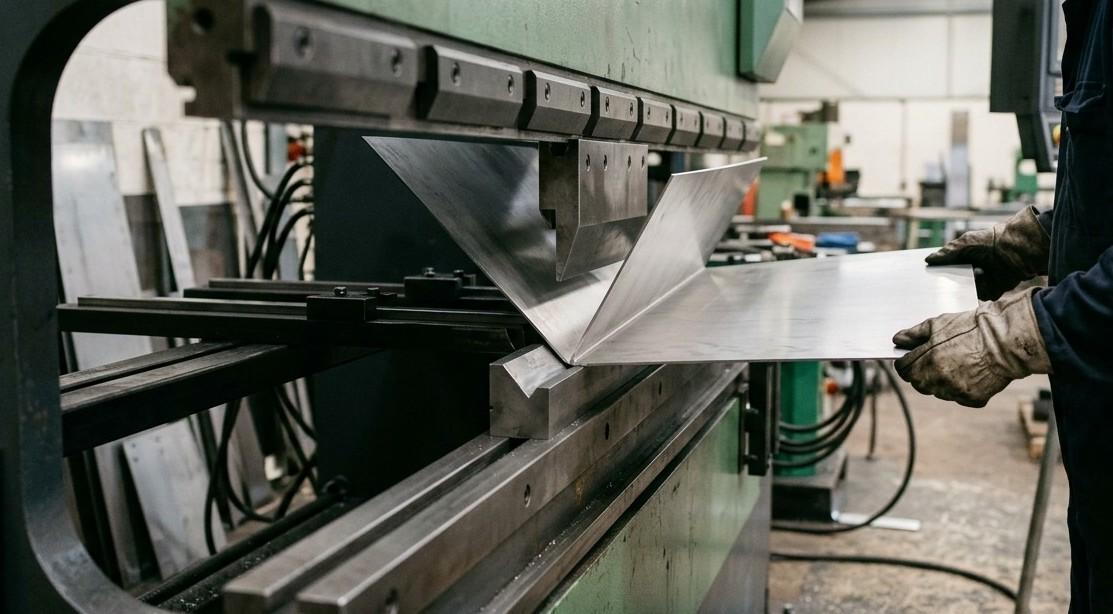
What Is a Press Brake Machine?

A press brake machine is used to bend sheet metal into V, U, or custom shapes using a punch-and-die system.

Common applications include:

  • Metal cabinets
  • Electrical panels
  • HVAC ducts
  • Industrial enclosures
  • Structural brackets

CNC press brakes are widely used in Dubai fabrication workshops because they offer higher precision and automation compared to manual models.

What Is a Pipe Bending Machine?

A pipe bending machine is designed to bend pipes and tubes without collapsing their internal diameter.

It is commonly used in:

  • Plumbing systems
  • Oil & gas pipelines
  • Automotive exhaust systems
  • Structural steel frameworks

In the UAE oil and infrastructure sector, accurate pipe bending is essential for long-lasting pipeline systems.

What Is a Plate Rolling Machine?

A plate bending or rolling machine uses rollers to bend large metal plates into cylindrical or curved shapes.

It is typically used for:

  • Storage tanks
  • Silos
  • Pressure vessels
  • Industrial drums

Large-scale industrial projects in Dubai rely heavily on heavy-duty plate rolling machines.

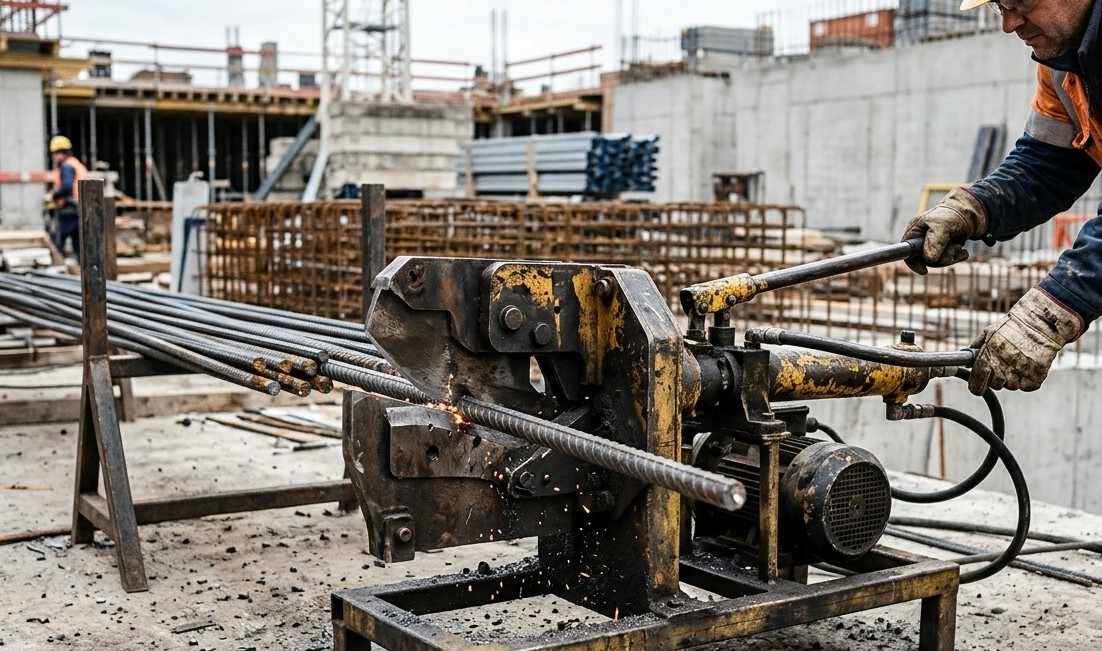
What Is a Bar Bending Machine?

A bar bending machine is primarily used in construction for bending reinforcement bars (rebar).

It helps in:

  • Preparing steel for concrete beams
  • Column reinforcement
  • Foundation structures
  • Infrastructure development

Due to continuous construction growth, bar bending machines are essential equipment on most UAE job sites.

What Materials Can Be Bent Using a Bending Machine?

Bending machines can process various metals, including:

  • Mild steel
  • Stainless steel
  • Structural steel
  • Aluminum
  • Copper
  • Brass

The machine’s tonnage capacity must match the material thickness and tensile strength to avoid cracking or deformation errors.

What Are the Key Applications of Bending Machines in Dubai & UAE?

Construction Industry

The construction sector in Dubai uses bending machines for:

  • Reinforcement bar shaping
  • Steel frame preparation
  • Structural component fabrication

With large infrastructure and commercial projects, precise metal forming is critical.

Oil & Gas Industry

Bending machines are used for:

  • Pipeline fabrication
  • Structural supports
  • Heavy-duty metal components

Industrial operations often follow guidelines from authorities such as UAE Civil Defence to ensure safe equipment operation.

Manufacturing & Fabrication

Fabrication workshops across the UAE use CNC bending machines for:

  • Metal enclosures
  • Machine parts
  • Industrial panels
  • Equipment housings

Compliance with international safety practices referenced by organizations like OSHA and NFPA helps maintain safe production environments.

What Are the Advantages of Using a Bending Machine?

High Precision

CNC-controlled bending ensures accurate angles and consistent output.

Faster Production

Automated systems significantly improve manufacturing speed.

Reduced Material Waste

Precise calculations reduce scrap and rework.

Improved Workplace Safety

Modern bending machines reduce manual handling risks.

Scalability

Suitable for both small workshops and large industrial facilities.

Bending Machine vs Manual Bending: What Is the Difference?

FeatureBending MachineManual Bending
AccuracyHigh precisionLow precision
SpeedFast productionSlow
SafetySafer operationHigher risk
OutputConsistentVariable
Industrial UseLarge scaleLimited

Industrial sectors in Dubai and across the UAE prefer automated bending solutions due to efficiency and safety standards.

How to Choose the Right Bending Machine?

Before selecting a bending machine, consider:

  • Type of material
  • Thickness of metal
  • Required bending angle
  • Daily production volume
  • Automation needs (Manual, Hydraulic, CNC)
  • Budget and maintenance requirements

For heavy-duty UAE industrial projects, hydraulic or CNC machines are typically recommended due to durability and performance.

AI Overview

Learn what a bending machine is, its types, working methods, and industrial uses in Dubai and UAE. Explore how these machines enhance metal shaping, precision, and productivity in fabrication.

FAQs

Can a bending machine bend thick steel plates?

Yes, heavy-duty hydraulic and CNC bending machines can bend thick structural steel plates depending on tonnage. UAE industrial workshops use these machines for large-scale fabrication.

What is the difference between a press brake and a rolling machine?

A press brake bends metal at fixed angles using a punch and die, while a rolling machine forms cylindrical or curved shapes using rollers. Both are used in UAE manufacturing and construction projects.

Is CNC bending better than manual bending?

Yes, CNC bending machines provide higher accuracy, repeatability, and efficiency. They are ideal for industrial-scale production in Dubai fabrication and manufacturing industries.

Are bending machines necessary for construction projects in Dubai?

Yes, bar bending machines are essential on construction sites in Dubai and across the UAE for shaping reinforcement bars used in beams, columns, and foundations.

What types of bending machines are commonly used in UAE industries?

UAE industries commonly use press brakes, pipe bending machines, plate rollers, and CNC systems to meet metal fabrication needs in construction, oil & gas, and manufacturing sectors.

Conclusion

In conclusion, a bending machine is a vital industrial metal forming solution used to bend sheets, pipes, plates, and reinforcement bars with precision, efficiency, and safety. With a range of types including press brakes, pipe bending machines, plate rollers, and CNC systems, these machines are essential for construction, manufacturing, oil & gas, and infrastructure projects across Dubai and the UAE.

For industrial operators, contractors, and machinery owners, Al Yaqeen Hardware provides a complete selection of certified bending machines and metal fabrication equipment designed to meet local industrial demands. 

Contact our industrial experts to secure high-performance machinery engineered for durability, regulatory compliance, and peak operational productivity.

 Top 5 Steel Bending Machines for Construction

electric-vs-manual-hoists-which-one-is-more-efficient

Electric vs Manual Hoists: Which Is Safer & More Efficient?

When it comes to lifting heavy loads in industrial settings, choosing the right hoist can make a substantial difference in efficiency, safety, and operational costs. Both electric hoists and manual hoists serve the same fundamental purpose, but their design, capabilities, and ideal applications vary significantly. 

Understanding these differences is essential for warehouse managers, construction supervisors, and industrial procurement specialists aiming for optimized workflow and safer job sites.

What Is an Electric Hoist?

An electric hoist uses a motorized mechanism powered by AC or DC current to lift and lower loads with the push of a button. Operators control it via a pendant or wireless remote, delivering consistent lifting speeds regardless of load weight or shift duration.

Modern electric hoists come in chain or wire rope configurations and often include Variable Frequency Drives (VFD) for smooth, precise load control. If you are sourcing reliable units for your facility, browse our full range of lifting equipment to find the right specification for your operation.

What Is a Manual Hoist?

A manual chain hoist relies entirely on human effort. The operator pulls a hand chain that drives a gear system to lift the load. Lever hoists work similarly, using a ratchet mechanism that allows one-handed operation and angled pulling.

Manual hoists require no power source, making them ideal for remote sites, confined spaces, and emergency applications. Their simple mechanical design means low upfront cost, easy maintenance, and wide parts availability anywhere in the world.

Safety Comparison: Electric vs Manual

Automated Safety in Electric Hoists

Electric hoists with overload protection are equipped with load limiters, electromagnetic brakes, and upper/lower limit switches that trigger automatically when safe thresholds are exceeded. This layered safety architecture removes reliance on real-time human judgment during critical lifting moments.

In high-volume warehouse or plant environments, these safeguards significantly reduce the risk of dropped loads, chain failure, and operator injury. Brands like Novawinch engineer their electric winch systems specifically for these demanding, high-frequency industrial environments.

Operator-Dependent Safety in Manual Hoists

Manual hoists are safe tools but only when used correctly, within rated capacity, by a trained and physically capable operator. Fatigue, distraction, and improper rigging are the leading risk factors, none of which can be mechanically controlled.

That said, manual hoists do feature mechanical load brakes that hold a suspended load when chain tension is released. For occasional, low-weight lifts with trained personnel, they remain a proven and compliant industrial lifting solution.

Efficiency and Productivity

Speed and Throughput

Lifting speed is a direct output variable in any production or logistics environment. A standard electric hoist operates at 8 to 16 feet per minute consistently, shift after shift, while a manual hoist speed depends entirely on the operator and declines with fatigue.

For operations running multiple lift cycles per hour, the cumulative time difference is significant. A unit like the Novawinch 12,000lb heavy-duty electric hoist demonstrates exactly how motorized systems deliver repeatable performance that manual alternatives simply cannot match.

Ergonomics and Workforce Performance

Ergonomic lifting equipment is a measurable factor in reducing injury claims, absenteeism, and workforce turnover. Repeatedly pulling a hand chain across an eight-hour shift causes cumulative shoulder, arm, and back strain that compounds over weeks.

Electric hoists eliminate that physical burden, allowing operators to focus entirely on load control and site awareness. They also reduce dependency on experienced operators, delivering consistent results regardless of who is running the equipment.

Cost: Upfront Price vs Total Ownership Value

Manual hoists have a clear advantage in purchase price. A quality chain block costs a fraction of a comparable electric unit. For low-frequency or backup applications, that upfront saving is entirely justified and financially sound.

Electric hoists deliver lower total cost of ownership over time. Reduced labor hours, fewer injury-related costs, and higher throughput consistently offset the initial investment, especially in operations with daily, high-cycle lifting demands.

Application Fit: Choosing the Right Tool

Where Electric Hoists Perform Best

Electric hoists are the right choice for indoor manufacturing facilities, warehouses, and production lines where overhead crane and hoist systems run through multiple shifts. They excel with stable power supply, high lift frequency, and strict ergonomic or safety compliance requirements.

If your operation handles loads above two tonnes regularly or runs continuous duty cycles, a heavy-duty electric hoist rated H3 or above by HMI standards is the engineered necessity. Contact our experts to match the right specification to your application.

Where Manual Hoists Make Practical Sense

Manual hoists are the practical answer for remote construction sites, marine environments, and confined spaces where electrical supply is unavailable or unsafe. Their portability, corrosion-resistant variants, and zero-power requirement make them irreplaceable in these conditions.

For sites that need reliable pulling and load control without a power source, a hydraulic solution like the hydraulic winch 10,000lb offers a capable middle ground between manual effort and full electric operation. Portable lifting equipment like this keeps your team productive wherever the job takes them.

Maintenance Requirements

Electric Hoist Maintenance

Electric hoist maintenance covers motor insulation checks, brake system inspection, limit switch testing, control panel integrity, and chain or wire rope wear assessment. Modern units with self-diagnostic systems flag issues early, reducing unplanned downtime significantly.

Maintenance intervals follow ASME B30.16 in North America and EN 14492 in Europe. Explore our Stanley lifting equipment range for certified accessories and rigging tools that keep your hoist system compliant and fully operational year-round.

Manual Hoist Maintenance

Manual hoist upkeep is simpler by design, covering chain elongation checks, load brake testing, hook latch inspection, and gear lubrication as the core requirements. Parts are inexpensive, widely available, and inspections are manageable for qualified in-house technicians.

Both types fall under LOLER compliance requirements where applicable, mandating thorough examination every 6 or 12 months depending on application. Skipping scheduled inspections is where most avoidable lifting incidents originate.

Frequently Asked Questions

Is an electric hoist safer than a manual hoist?

Yes, electric hoists use overload protection, limit switches, and electromagnetic brakes to minimize human error. Manual hoists are safe only if operated correctly and within rated limits

What load capacity can a manual hoist handle?

Quality manual chain hoists are rated up to 20 tonnes WLL, sufficient for many industrial applications. For sustained high-capacity lifting, electric hoists provide more consistent and sound performance.

How do I select the right hoist for my site?

Assess maximum load weight, lift frequency, power availability, and environmental conditions before specifying equipment.  Add a 20% safety margin and ensure electric hoist duty cycles match actual usage patterns.

What does duty cycle mean for electric hoists?

The duty cycle (H1–H5 per HMI standards) indicates how often an electric hoist can operate safely within a set period. Choosing a hoist with the correct duty cycle prevents overheating and ensures reliable performance.

Key Takeaways

Choosing between electric hoists and manual hoists depends on load requirements, operational frequency, safety needs, and budget. While manual hoists offer portability and low cost for light-duty lifting, electric hoists excel in safety, efficiency, and high-capacity operations.

Your Lifting Partner for Every Load, Every Site

From lifting machinery to material handling in industrial facilities, investing in the right hoisting equipment enhances operational efficiency and workplace safety. For reliable solutions tailored to your lifting needs, trust Al Yaqeen Hardware.

Contact our hoisting specialists to ensure the safest, most efficient solution for your site needs.

Expand Your Knowledge: Related Industry Guides

Search for products

Back to Top
Product has been added to your cart
Compare (0)