How to Choose the Right Lifting Equipment for Industrial Applications
Choosing the right lifting equipment for industrial applications is a critical decision that directly affects workplace safety, operational efficiency, and long-term productivity. Whether you operate in construction, manufacturing, warehousing, logistics, or heavy engineering, selecting the correct material handling system ensures smoother workflows and reduces costly downtime.
This guide explains how to choose the right lifting equipment using practical selection factors, industry insights, and real-world considerations.
Why Choosing the Right Lifting Equipment Matters
Lifting operations are a daily necessity in most industrial environments. However, improper equipment selection can create serious risks and inefficiencies.
Poor choices often lead to:
- Workplace accidents and safety hazards
- Equipment overload and breakdowns
- Increased maintenance and repair costs
- Delays in production and project timelines
- Non-compliance with safety regulations
That is why businesses must adopt a structured approach to industrial lifting equipment selection instead of choosing tools based only on cost.
Common Types of Lifting Equipment Used in Industry
Understanding different lifting systems is the first step in making the right choice.
Chain Hoists
Chain hoists are compact lifting devices used for medium-weight loads. They are commonly found in workshops and maintenance areas due to their simplicity and affordability.
They are best suited for controlled vertical lifting tasks in smaller industrial setups.
Wire Rope Hoists
Wire rope hoists are designed for heavy-duty and continuous lifting operations. They offer higher speed, durability, and lifting capacity compared to chain hoists.
In manufacturing plants and engineering workshops where reliability is critical, systems like the Pro 9500 wire rope hoist are widely used for stable and continuous load handling in demanding environments.
Overhead Cranes
Overhead cranes are essential for large industrial facilities where materials need to be moved across long distances within a fixed workspace. They provide both vertical and horizontal movement and are commonly used in factories, warehouses, and steel plants.
Gantry Cranes
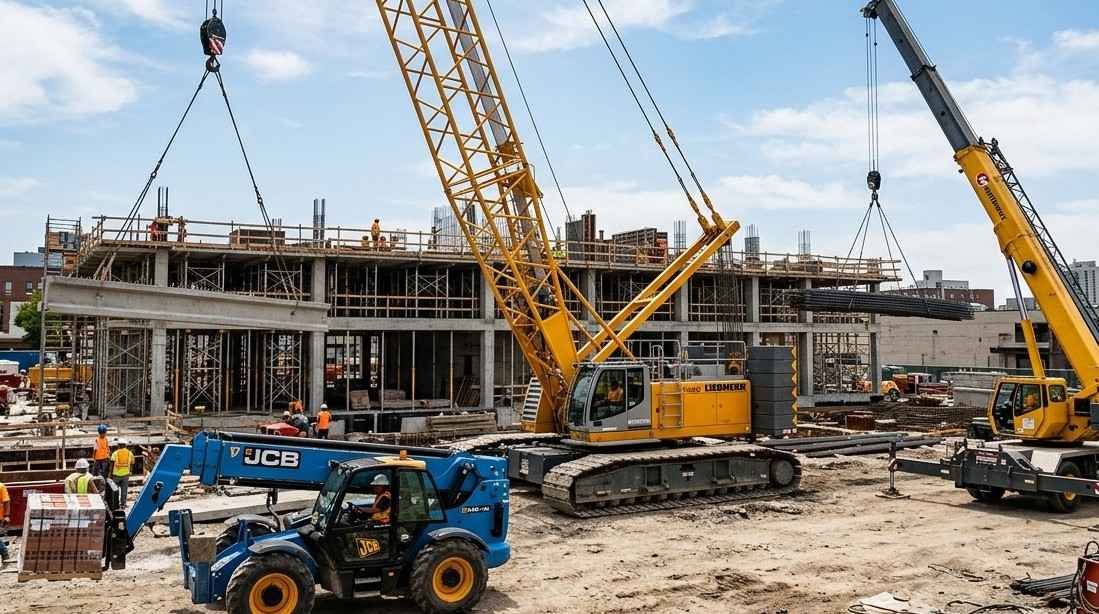
Gantry cranes are similar to overhead cranes but supported by freestanding structures, making them suitable for outdoor applications such as shipping yards and construction sites.
Hydraulic Lifting Systems
Hydraulic systems use pressurized fluid to lift extremely heavy loads with precision and stability. They are commonly used in automotive workshops and heavy machinery servicing environments.
Key Factors to Consider When Choosing Lifting Equipment
Load Capacity Requirements
The most important factor is the weight of the load. Every lifting system has a defined capacity, and exceeding it can lead to serious hazards.
Always consider:
- Maximum load weight
- Frequency of lifting
- Required safety margin
Lifting Height and Workspace Layout
Different environments require different lifting ranges and movement patterns.
For example:
- Warehouses require efficient vertical stacking systems
- Construction sites need higher lifting reach
- Manufacturing plants need controlled fixed-zone lifting
In warehouse environments where space optimization is important, compact solutions like the SXWTI-CSTACK15 stacker lifting equipment are commonly used for efficient vertical stacking and improved storage control.
Frequency of Use and Duty Cycle
Usage frequency plays a major role in equipment selection:
- Light-duty: occasional lifting
- Medium-duty: regular daily operations
- Heavy-duty: continuous industrial use
For daily warehouse logistics and fast pallet movement, the SXWTC-CPT-25 hydraulic pallet truck is widely used to ensure smooth transport of heavy loads across industrial floors.
Work Environment Conditions
Work environment conditions directly affect equipment performance and lifespan. Different environments require specific protection:
- High temperature → heat-resistant materials
- Corrosive areas → anti-rust coatings
- Dusty environments → sealed systems
- Outdoor use → weatherproof construction
Safety Features and Compliance
Modern lifting equipment should include:
- Overload protection
- Emergency stop systems
- Limit switches
- Anti-fall mechanisms
- Certified safety compliance
Maintenance Requirements
Before selecting equipment, evaluate:
- Ease of maintenance
- Spare parts availability
- Local technical support
- Lubrication and inspection access
Power Source Options
- Electric systems → automation & efficiency
- Hydraulic systems → heavy-force lifting
- Manual systems → small-scale operations
- Pneumatic systems → specialized environments
Common Mistakes to Avoid
Many businesses make costly mistakes when selecting lifting equipment. These errors can reduce efficiency and increase operational risk.
- Choosing only based on lowest price
- Ignoring load safety margins
- Overlooking environmental conditions
- Not planning for future expansion
- Using incorrect equipment type
Improving Efficiency with the Right Equipment
The right lifting system improves:
- Material handling speed
- Workplace safety
- Labor efficiency
- Long-term maintenance costs
- Overall productivity
When all these factors are properly considered, industrial operations become significantly safer and more efficient.
Conclusion
Choosing the right lifting equipment is essential for ensuring safety, efficiency, and long-term productivity in industrial operations. The correct selection depends on load capacity, working environment, usage frequency, and safety requirements.
A well-planned approach helps reduce downtime, improve operational performance, and extend equipment lifespan while minimizing risks.
For reliable lifting equipment solutions, expert guidance, and quality industrial products, visit Al Yaqeen Hardware Trading LLC or contact the team through the Contact Us page.
Explore More Industrial Guides & Articles
If you are planning to upgrade or build your workshop or industrial setup, you may also find these guides helpful:
- How to Choose the Right Power Trowel for Your Concrete Project – Understand key selection factors for achieving smooth and durable concrete finishing results.
- Types of Welding Machines & How to Choose the Right One – Learn about different welding technologies and how to select the right machine for your application.
- I Tested 5 Diesel Pumps on Sites — Here’s What Worked – A practical comparison of diesel pumps based on real-world performance and efficiency.
- Common Pressure Tank Mistakes and How to Fix Them – Identify common installation errors and learn how to improve pressure tank performance.