
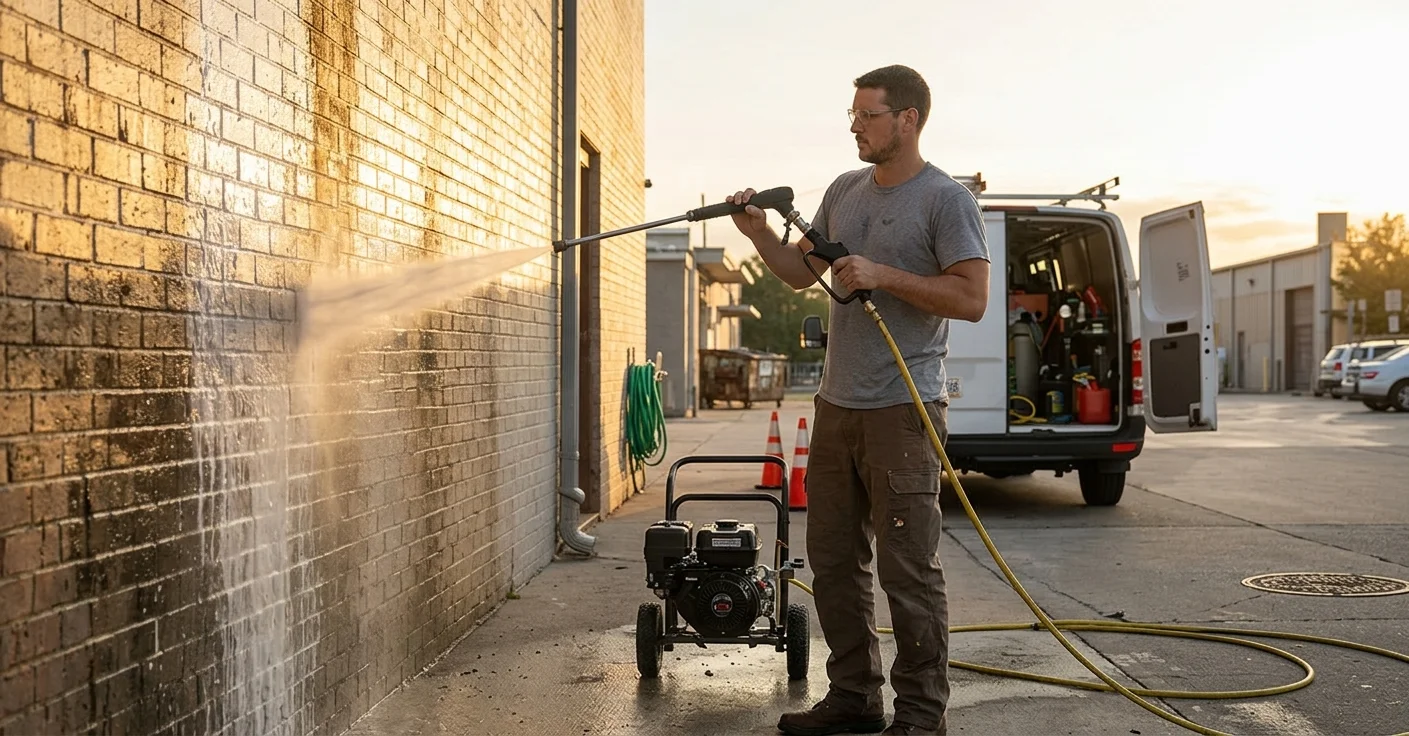
Pressure washers are sorted by power source (electric, petrol, cordless, diesel), water temperature (cold, hot, steam) and duty level (light, heavy, commercial). Electric and cordless models suit homes and small jobs, petrol and diesel models suit heavy outdoor work, and hot water or steam models cut grease. This guide covers the uses, pros and cons of each type, plus how to read PSI and GPM when comparing machines.
A dirty driveway, a dusty patio, a muddy car and a greasy workshop floor all call for a pressure washer, but not the same one. Knowing the types of pressure washers keeps you from buying too much power or too little.
Some machines run on electricity, some on fuel, and some heat the water before it hits the surface. Each has its own uses, pros and cons, and this guide covers all of them in plain terms so you can match the right machine to your job.
What Are the Different Types of Pressure Washers?
The main pressure washer types are electric, petrol, cordless, diesel, cold water, hot water and steam. They differ in power source, water temperature, mobility and cleaning strength. The right one depends on your surface, your dirt and whether power is available on site.
The table below compares the types of pressure washers at a glance.
| Type | Best for | Strength | Limitations |
| Electric | Cars, patios, garden tools, home cleaning | Easy to use, quiet, low maintenance | Needs a power outlet |
| Petrol | Driveways, large areas, heavy dirt | High pressure, portable, no outlet needed | Loud, higher maintenance, fumes |
| Cordless | Bikes, boots, quick tasks | Highly portable, fast setup | Low pressure, short runtime |
| Diesel | Industrial sites, farms, fleets | Very powerful, long operation | Expensive, heavy, high upkeep |
| Cold water | Dust, mud, everyday dirt | Simple and cost effective | Weak on grease and oil |
| Hot water | Grease, oil, workshops | Strong degreasing | Costly, heavier system |
| Steam | Deep industrial cleaning, sanitising | Extreme cleaning power | Very costly, specialised |
Which Pressure Washer Types Are Defined by Power Source?
Power source splits pressure washers into electric, petrol, cordless and diesel models. Electric suits homes, petrol and diesel suit heavy outdoor work, and cordless suits quick small tasks. These types of pressure washers trade convenience against power, so each fits a different working environment.
What Is an Electric Pressure Washer Used For?
An electric pressure washer uses a motor, so it starts easily and needs little maintenance. It suits cars, patios, fences, balconies and garden furniture where a socket is nearby. Household electric models commonly sit between 1,300 and 2,000 PSI.
Pros
- Easy startup with no fuel
- Lower maintenance than petrol or diesel
- Quiet enough for residential areas
Cons
- Needs a nearby power outlet
- Cable length limits movement
- Less force than engine driven models
When Is a Petrol Pressure Washer the Better Choice?
A petrol pressure washer is the better choice when power is unavailable or the job needs more force than an electric unit gives. Petrol models commonly deliver 2,000 to 4,000 PSI, which suits driveways, concrete, brick, muddy equipment and building sites.
Pros
- Moves freely without a socket
- Stronger pressure and flow than most electric models
- Handles large outdoor areas
Cons
- Never use indoors because of exhaust fumes
- Louder than electric models
- Needs fuel, oil checks and regular servicing
What Can a Cordless Pressure Washer Clean?
A cordless pressure washer cleans light jobs such as bicycles, camping gear, boots, garden tools and small vehicles. It runs on a battery, so it works anywhere. Many battery models top out around 600 PSI, so they cannot replace a corded or engine driven machine.
Pros
- Easy to carry
- Quick setup for small tasks
- Works where no socket exists
Cons
- Limited battery runtime
- Lower cleaning force than corded models
- Too weak for thick mud, large driveways or concrete
Do You Need a Diesel Pressure Washer?
Most households do not need a diesel pressure washer. It is built for professional, agricultural and industrial cleaning, such as trucks, tractors, loaders and fleet vehicles, where long operation matters more than size.
Pros
- Suits long, repeated professional use
- Good match for farms, yards and industrial sites
- Can run heavy duty cold or hot water systems
Cons
- Too large and costly for home users
- Needs fuel management and engine servicing
- Higher maintenance cost than electric washers
Which Pressure Washer Types Are Defined by Water Temperature?
Water temperature is the second way the types of pressure washers differ, splitting them into cold water, hot water and steam. Cold water handles everyday dirt, hot water cuts grease and oil, and steam gives the deepest industrial clean.
When Is a Cold Water Pressure Washer Enough?
A cold water pressure washer is enough for most everyday cleaning. It relies on pressure, flow and the right nozzle to remove dirt and dust from cars, patios, tiles and garden furniture. Electric, cordless, petrol and diesel models can all be cold water.
Pros
- Simple and cost effective
- No heating system to maintain
- Practical for most home and garden tasks
Cons
- Less effective on grease and oil
- Slower on stubborn grime
- Poor fit for workshops and greasy equipment
Why Choose a Hot Water Pressure Washer?
A hot water pressure washer heats the water before spraying, so it removes grease, oil and sticky grime much faster than cold water. It suits garages, workshops, factories and maintenance work where cold water cleans too slowly.
Pros
- Better on grease and oil
- May reduce detergent use
- Faster for professional cleaning
Cons
- More expensive than cold water models
- Heavier because of the heating system
- Hot water raises burn risk, so follow OSHA safety guidance
What Is a Steam Pressure Washer Best For?
A steam pressure washer uses very hot water or steam for deep cleaning and sanitising. It suits oily engines, machinery parts and factory surfaces, and its strength is heat rather than pressure alone.
Pros
- Strong on grease and oily grime
- Useful in industrial and automotive settings
- Can reduce chemical use
Cons
- Too specialised for most home cleaning
- Costly and complex compared with standard washers
- High temperatures need careful handling
How Does Duty Level Change Pressure Washer Choice?
Duty level groups pressure washers as light, heavy or commercial, and it overlaps with the main types of pressure washers. Light duty models reach roughly 1,900 PSI and 2 GPM, while heavy duty models reach about 2,800 PSI and 3 GPM. Commercial units go beyond that for daily work.
To compare machines fairly, multiply PSI by GPM to get cleaning units. A 3,000 PSI washer at 2.0 GPM and a 2,000 PSI washer at 3.0 GPM both score 6,000. The second rinses faster, while the first strips harder.
Match pressure to the surface too. High PSI can mark wood and stucco, so test a hidden spot first. You can compare machines from pressure washer suppliers UAE Sharjah buyers rely on.
Conclusion
Understanding the different types of pressure washers helps businesses select equipment that matches their cleaning requirements. Electric models are practical for routine maintenance, petrol and diesel machines offer mobility for outdoor work, and cold water units handle general dirt. Hot water pressure washers are particularly useful for removing many grease and oil deposits.
Before purchasing, compare working pressure, water flow, power source, temperature capability and maintenance requirements. Businesses looking for suitable cleaning equipment can explore the range available from Al Yaqeen Hardware and compare individual models against their site conditions and workload.
Find the right pressure washer for your job
Tell us what you clean, how often you clean it and what power is available on site. Our team will recommend the right pressure washer and give you a clear quote, so you buy the machine your work actually needs.
FAQs
What are the three main kinds of pressure washers?
By power source, the three main kinds are electric, petrol and diesel. Electric suits home use, petrol suits large outdoor jobs, and diesel suits industrial work. Cordless models are a lighter option for small tasks.
Is an electric or petrol pressure washer better?
Electric is better for home use because it is quieter, lighter and easier to maintain. Petrol is better when no outlet exists or when you need higher pressure for driveways, concrete and heavy mud.
Is PSI or GPM more important when choosing a pressure washer?
Both matter. PSI is the force that lifts dirt, and GPM is the flow that rinses it away. Multiply them to get cleaning units, which gives a fair way to compare two machines.
Read More Blogs From Al Yaqeen Hardware
- Industrial Machines: An Informative Guide to Types And Uses covers generators, welding machines, air compressors and pumps used across industrial sites.
- Important Factors to Know Before Investing in Power Tools breaks down what to check on power source, safety and durability before buying equipment.
- Best Air Compressor Brands and Suppliers in UAE compares leading brands to help you pick the right compressor for your site.
- Bar Bending Machine Benefits for Modern Construction Projects explains how the right bending equipment improves speed and accuracy on site.
- 5 Tips to Extend Your Bar Bending Machine’s Life shares practical upkeep habits that apply to power equipment generally.

Leave a comment
Your email address will not be published. Required fields are marked *