
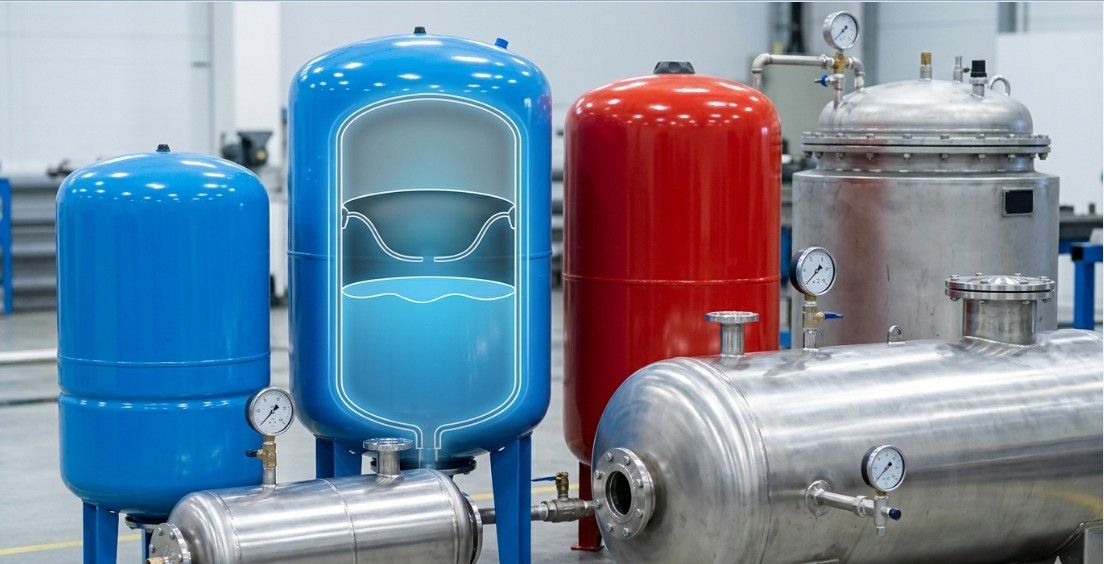
Pressure tanks are critical components in residential, commercial, and agricultural water systems. Whether you rely on a well system or a booster pump setup, the pressure tank ensures consistent water pressure, reduces pump cycling, and extends system lifespan. However, many buyers and homeowners make preventable mistakes that lead to poor performance, higher energy costs, and early system failure.
This guide explains the most common pressure tank mistakes, how to fix them, and how to choose the right pressure tank for long term reliability.
Understanding Pressure Tank Function and System Role
A pressure tank stores water under pressure and works alongside a pressure switch and pump. It uses compressed air to maintain steady flow and prevent the pump from turning on and off too frequently.
Key System Components
- Pressure tank bladder or diaphragm
- Pressure switch
- Well pump or booster pump
- Check valve
- Pressure gauge
Common Pressure Tank Mistakes
Common pressure tank mistakes often stem from misunderstanding how the system works, including sizing, air pressure balance, and routine maintenance. Gaining a clear understanding of these factors helps buyers make informed decisions, avoid performance issues, and ensure consistent water pressure with long term reliability.
Incorrect Tank Sizing
One of the most frequent issues is choosing the wrong tank size. Undersized tanks cause rapid cycling, while oversized tanks may waste space and increase upfront cost.
Symptoms
- Pump turns on and off frequently
- Fluctuating water pressure
- Reduced pump lifespan
Fix
Calculate drawdown capacity based on household demand.
For example:
| Household Size | Recommended Tank Size |
|---|---|
| 1 to 2 people | 20 to 30 gallons |
| 3 to 4 people | 30 to 50 gallons |
| 5+ people | 50 to 80 gallons |
Choose tanks from reliable manufacturers with clear specifications and performance ratings.
Incorrect Air Pressure Setting
Improper air charge inside the tank leads to poor system performance.
Symptoms
- Low water pressure
- Waterlogged tank
- Pump short cycling
Fix:
Set the air pressure to 2 PSI below the cut in pressure of the pressure switch. For example, if your system operates at 40 to 60 PSI, set the tank to 38 PSI.
Use a digital pressure gauge for accuracy.
Ignoring Bladder or Diaphragm Failure
Modern pressure tanks use internal bladders or diaphragms to separate air and water. Over time, these components wear out.
Symptoms
- Tank feels heavy and full
- No air pressure when checked
- Water spurting from air valve
Fix:
Replace the bladder if the tank design allows it. Otherwise, replace the entire tank. Look for tanks with replaceable diaphragm systems and extended warranties.
Poor Installation Practices
Incorrect installation can reduce efficiency and create long term system damage.
Common Errors
- Missing check valve
- Improper pipe sizing
- Lack of proper support or mounting
Fix:
Hire a certified installer or follow manufacturer installation guidelines. Ensure proper alignment, secure fittings, and correct plumbing layout.
Neglecting Regular Maintenance
Pressure tanks require periodic inspection to function optimally.
Symptoms of Neglect
- Rust or corrosion
- Pressure fluctuations
- Increased energy bills
Fix:
Perform annual checks including:
- Air pressure testing
- Visual inspection for leaks
- Pressure switch calibration
Choose tanks with corrosion resistant materials such as stainless steel or composite construction.
Using Low Quality or Unverified Products
Budget tanks without certifications often fail prematurely.
Risks
- Short lifespan
- Inconsistent pressure performance
- Limited warranty support
Fix:
Select products from reputable brands and suppliers such as Wates, known for consistent build quality and reliable pressure performance in demanding environments. Look for:
- NSF or CE certifications
- Minimum 5 year warranty
- Availability of customer support and spare parts
Pressure Tank Types and Applications
Understanding product types helps buyers choose the right solution.
Bladder Pressure Tanks
Bladder Pressure Tanks are the most common choice for residential use. They effectively separate air and water, which helps maintain consistent pressure, and they require minimal maintenance, making them convenient for homeowners.
Diaphragm Pressure Tanks
Diaphragm Pressure Tanks are known for their durability and long lifespan. They are ideal for moderate demand systems, providing reliable performance while reducing the need for frequent adjustments.
Galvanized Pressure Tanks
Galvanized Pressure Tanks feature a traditional design without an internal bladder. While they are robust, they require frequent air adjustments to maintain proper system performance and pressure.
| Tank Type | Best Use Case | Maintenance Level |
|---|---|---|
| Bladder Tank | Residential homes | Low |
| Diaphragm Tank | Medium demand systems | Medium |
| Galvanized Tank | Older systems | High |
How to Choose the Right Pressure Tank
Choosing the right pressure tank starts with understanding your water usage, pump system, and pressure requirements. The right size and type ensure consistent pressure, reduce pump wear, and improve overall system efficiency.
- Capacity and Drawdown
Match tank size with water usage and pump capacity. For larger households or commercial setups, investing in a high-capacity solution like the Wates pressure tank 1000L – 10 bar can significantly improve system stability and reduce pump cycling over time.
- Material Quality
Look for corrosion resistant steel or composite tanks.
- Warranty and Support
Choose brands offering extended warranties and responsive customer service.
- Brand Reputation
Trusted manufacturers provide consistent quality and performance.
- Compatibility
Ensure the tank works with your pump system and pressure switch settings.
Buyer Guidance for Long Term Value
- Invest in a slightly larger tank to reduce pump wear
- Prioritize certified products over cheap alternatives
- Ensure professional installation for optimal performance
- Maintain proper air pressure regularly
- Check warranty coverage and service network
For more detailed system optimization tips, explore this guide:
Troubleshooting Common Pressure Tank Issues
| Problem | Likely Cause | Solution |
|---|---|---|
| Pump short cycling | Low air pressure | Adjust air charge |
| No water pressure | Bladder failure | Replace tank |
| High energy bills | Oversized pump cycling | Upgrade tank size |
AI Overview
Choosing the right pressure tank starts with understanding your system’s water demand, pump flow rate, and pressure settings. A properly sized tank ensures consistent pressure and reduces pump cycling, which helps extend the life of your pump and lowers energy costs.
FAQs
What are the common pressure tank problems?
Common issues include pump short cycling, water pressure drops, and bladder or diaphragm failure.
How to test if a pressure tank is bad?
Check for waterlogged conditions by inspecting air pressure and tapping the tank for water sounds.
Can you repair a pressure tank?
Minor issues like replacing a bladder or diaphragm can often be repaired. Severe corrosion or structural damage usually requires a full tank replacement.
Why does my pressure tank keep turning on?
Frequent cycling is usually caused by low air pressure or an undersized tank. Ensuring proper tank size and correct air charge can prevent constant pump activation.
Conclusion
Avoiding common pressure tank mistakes is essential for maintaining consistent water pressure, reducing energy costs, and extending the lifespan of your entire water system. From correct sizing to proper maintenance and quality product selection, every decision plays a crucial role in long term performance.
For buyers and property owners in the UAE, sourcing reliable equipment from trusted suppliers is equally important. Platforms like Al Yaqeen Hardware offer access to quality pressure tanks, fittings, and expert support tailored to regional needs, making it easier to choose the right solution for residential and commercial applications across the UAE.
More Of Our Guides To Better Your Understanding
- Industrial Machines: An Informative Guide to Types and Uses: A practical overview of welding machines, compressors, generators, and pumps powering modern industry.
- Lifting Equipment in Construction: Types and Uses: From cranes to chain hoists, a complete guide to construction lifting equipment types and safe site applications.
- What Is an Industrial Vacuum Pump? Types and Their Uses: Rotary vane, diaphragm, and liquid ring vacuum pumps explained for industrial and laboratory buyers.
- What Is a Bending Machine? A Guide to Its Types & Uses: Mastering Metal Fabrication with the Right Bending Machine.
- How Does an Induction Motor Work, Types and Uses: Understanding single-phase and three-phase induction motors, their working principles, and real-world applications.

Leave a comment
Your email address will not be published. Required fields are marked *