
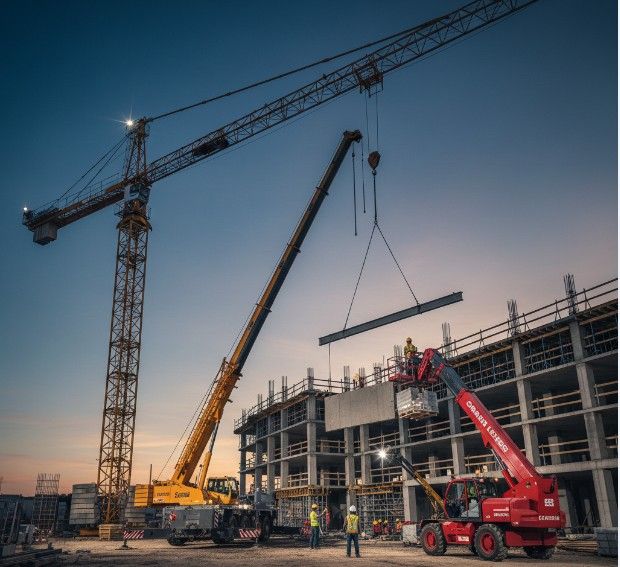
The role of lifting equipment in construction is fundamental to modern infrastructure projects, enabling crews to move heavy loads safely, efficiently, and precisely. From high rise developments to roadwork sites, lifting systems reduce manual handling risks and accelerate project timelines.
Professionals rely on advanced construction lifting equipment to position steel beams, concrete panels, HVAC units, and prefabricated components. Selecting the right machinery is not just about power, it involves engineering accuracy, compliance standards, and site conditions.
What Is Construction Lifting Equipment
Types of lifting equipment refer to mechanical devices designed to raise, lower, or move loads vertically or horizontally. These systems use mechanical, hydraulic, pneumatic, or electric power to multiply force beyond human capability.
Most equipment operates through pulleys, winches, motors, or hydraulic cylinders. Proper load distribution, balance, and rigging determine operational safety and efficiency.
Why Lifting Equipment Matters on Construction Sites
Reliable lifting systems ensure worker safety, structural precision, and regulatory compliance. Without them, large scale projects would be impractical due to weight limitations and handling risks.
Modern job sites depend on heavy lifting machinery to maintain productivity schedules and prevent costly delays. Certified lifting equipment also reduces liability and improves insurance approval rates.
How Lifting Equipment Works
Most lifting systems rely on mechanical advantage principles. Motors generate force which is transmitted through gears, pulleys, or hydraulics to multiply lifting capacity, especially when operators deploy equipment such as a hydraulic winch for controlled pulling and load positioning in demanding construction environments.
Sensors, load indicators, and braking systems enhance safety by preventing overload and sudden drops. Modern equipment integrates digital monitoring for real time performance tracking.
Materials Used in Lifting Equipment Manufacturing
Durability depends heavily on material selection. High grade steel alloys provide strength and fatigue resistance, while aluminum components reduce weight for portable units.
Synthetic fibers such as nylon and polyester are commonly used in slings due to flexibility and abrasion resistance. Corrosion resistant coatings extend lifespan in harsh environments.
Main Types of Lifting Equipment Used in Construction
Cranes
Construction cranes are the backbone of vertical lifting operations. They are designed to handle heavy materials at height while maintaining stability and load control.
Tower Cranes
Tower cranes are fixed to the ground and used for tall structures. They provide high load capacity, long reach, and precise rotation control.
Mobile Cranes
Mobile cranes are mounted on wheeled or tracked carriers, allowing mobility across job sites, and they often work alongside durable rigging accessories and tools from trusted manufacturers like Stanley to ensure reliability during lifting operations.
Hoists
Material hoists are used to transport tools, equipment, and supplies vertically between floors. They are commonly installed on scaffolding or temporary structures.
Chain hoists use a mechanical chain system for controlled lifting, but for higher torque pulling applications many contractors prefer heavy duty solutions such as Novavinch systems known for consistent performance under industrial loads. They are preferred for precision positioning tasks such as steel alignment or machinery installation.
Lifts and Platforms
Hydraulic lifts operate using pressurized fluid to raise platforms smoothly. They are widely used for maintenance, installation, and finishing work at height.
Rigging and Accessories
Supporting tools are just as important as primary machinery. Construction rigging equipment ensures loads remain stable during lifting operations.
Common rigging components include:
- Lifting slings made from polyester, wire rope, or chain
- Shackles and hooks with load ratings
- Spreader beams for balanced lifting
These components must match the load weight, shape, and center of gravity.
Standards, Certifications, and Compliance
Using certified lifting equipment ensures adherence to safety regulations and engineering benchmarks. Compliance is essential for legal operation and worker protection.
Key regulatory organizations include:
- OSHA for workplace safety requirements
- ISO for global equipment standards
- ANSI for engineering safety guidelines
If you need help verifying compliance specifications, you can request a quote or contact our experts for documentation review.
Practical Applications Across Construction Sectors
Different projects demand specialized site lifting solutions depending on load size, terrain, and height requirements. Residential builds typically use hoists and compact lifts, while industrial sites rely on cranes and gantries.
Infrastructure projects such as bridges and tunnels require synchronized lifting systems capable of handling oversized components with millimeter precision.
Comparison Factors When Choosing Equipment
Selecting the right industrial lifting tools involves technical evaluation rather than price alone. Decision makers consider:
- Load capacity and safety margin
- Lift height and reach range
- Power source availability
- Terrain compatibility
- Maintenance requirements
If specifications are unclear, it is wise to get technical assistance from equipment specialists before purchase.
How to Choose the Right Lifting Equipment
The correct choice depends on project scope, environment, and load characteristics. Engineers typically begin by calculating maximum load weight and required lift height.
Next, they assess site limitations such as access space, ground stability, and overhead clearance. Matching these factors ensures optimal performance and reduces operational risk.
Maintenance and Safety Best Practices
Routine inspection prevents mechanical failure and extends equipment lifespan. Operators should check cables, hooks, brakes, and hydraulic systems before each shift.
Scheduled servicing, lubrication, and load testing maintain reliability. Proper operator training is equally important for safe and efficient use.
FAQ Section
What are the types of lifting equipment?
Common types include cranes, hoists, lifts, slings, and winches. Each type is designed for specific load weights, heights, and site conditions.
What is SWL and WLL?
SWL means Safe Working Load, the maximum load equipment can safely handle. WLL stands for Working Load Limit, the manufacturer rated load capacity.
What are the different types of lifts in construction?
Construction lifts include scissor lifts, boom lifts, personnel lifts, and material lifts. Each serves different height access, mobility, and load positioning needs.
What are the 4 types of lifting in adnoc?
ADNOC classifies lifting as routine, non routine, critical, and engineered lifts. These categories define risk level, planning requirements, and supervision standards.
Conclusion
Construction projects depend on reliable lifting systems to handle demanding loads, maintain safety standards, and meet tight deadlines. Understanding equipment types, functions, and compliance requirements helps contractors choose tools that improve productivity and reduce operational risks.From compact hoists to advanced cranes, investing in the right industrial machinery ensures long term efficiency, regulatory compliance, and safer job sites. For dependable solutions tailored to your project needs, trust Al Yaqeen Hardware.
Leave a comment
Your email address will not be published. Required fields are marked *